In today’s manufacturing landscape, industries are constantly looking for materials that improve efficiency, reduce costs, and deliver consistent performance. One such material quietly powering multiple industries is modified starch.
From corrugated box manufacturing and coated abrasives to paints, mining, and paper tube cores, modified starches have become an essential industrial ingredient due to their versatility, adhesive strength, and eco-friendly nature.
As one of the experienced modified starch manufacturers in india,Premier Starch has been supplying performance-driven starch derivatives and dextrins to industrial sectors since 1988.
What Is Modified Starch?
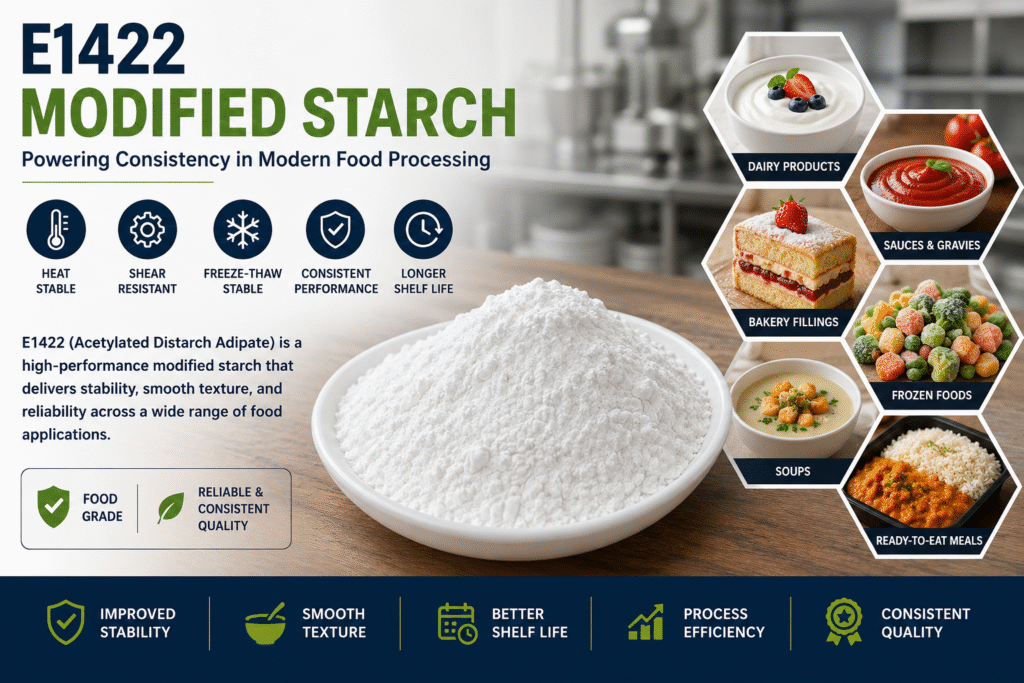
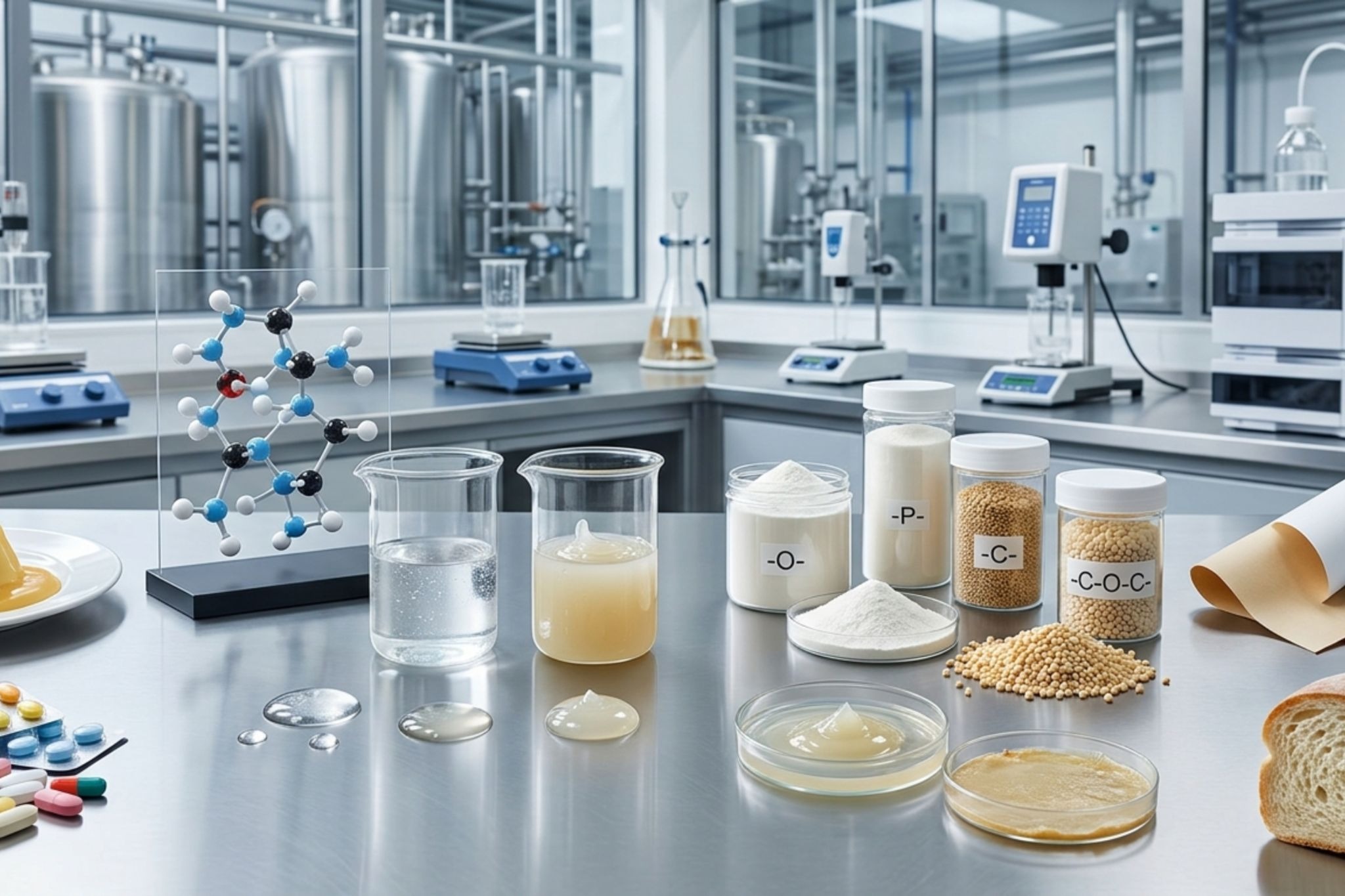
Modified starch is natural starch that has been physically, chemically, or enzymatically altered to improve its performance for specific industrial applications.
These modifications help starch achieve:
- Better viscosity stability
- Improved bonding strength
- Enhanced moisture resistance
- Faster drying and setting
- Improved solubility
- Better performance under heat and pressure
Unlike native starch, modified starch can withstand demanding industrial processes and varying production environments.
Why Industries Prefer Modified Starch
Modern industries require raw materials that deliver consistency during high-speed manufacturing operations. Modified starches are preferred because they offer:
| Property | Industrial Benefit |
| Strong adhesion | Better bonding performance |
| Controlled viscosity | Smooth machine operations |
| Fast drying | Improved production speed |
| Eco-friendly composition | Sustainable manufacturing |
| Cost-effectiveness | Lower operational costs |
| Custom formulations | Application-specific performance |
This is why many businesses today prefer working with an experienced industrial starch manufacturer capable of developing customised formulations.
Types of Modified Starches Used in Industries
Different industries require different starch properties. Below are some of the commonly used modified starch variants.
1. Corrugation Modified Starch
Used in corrugated box manufacturing for strong flute bonding and faster line speeds.
Applications include:
- Manual corrugation plants
- Semi-automatic plants
- High-speed automatic corrugators
Products like naturally integrated anchor text such as Stargel® TS Corrugation Gum Powder for Manual Plant and Stargel® 1120 for Semi Automatic Plants are designed to improve bonding efficiency in corrugation applications.
2. Carboxymethyl Starch (CMS)
CMS starch is widely used as:
- Thickening agent
- Binder
- Fluid loss control agent
Stargel® CMS is commonly used across industrial applications requiring stable viscosity and improved binding characteristics.
3. Dextrins
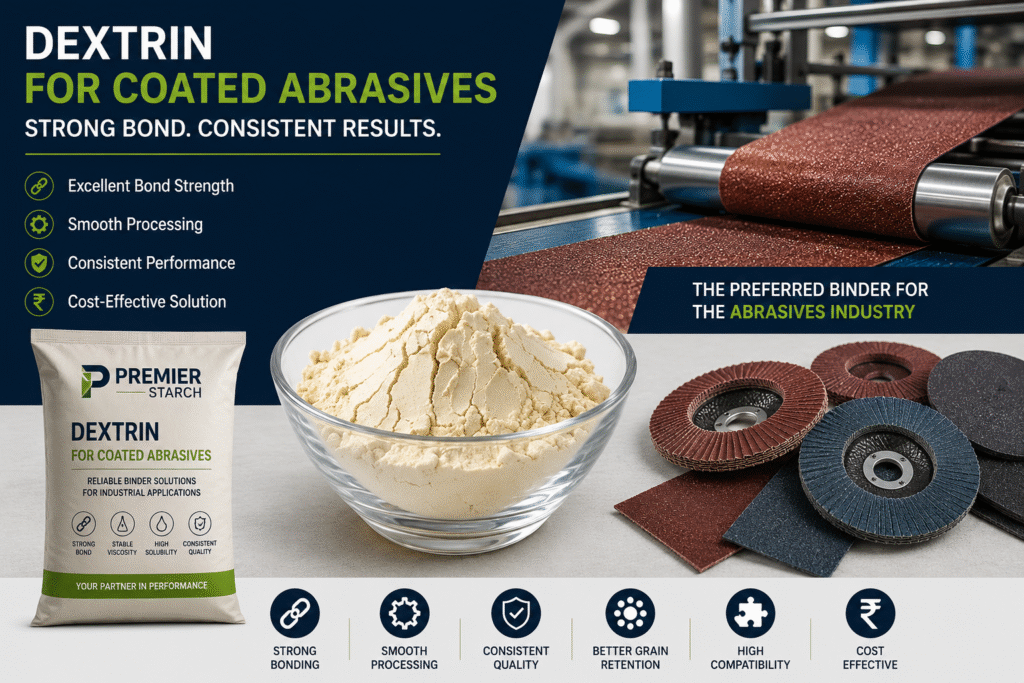
Dextrins are modified starch derivatives known for their excellent adhesive and binding properties.
Industries using dextrins include:
- Abrasives
- Paints & coatings
- Mining
- Foundry chemicals
- Paper tube cores
Popular industrial grades include:
- Stable tapioca dextrin
- Maize yellow dextrin
- White dextrin
- Tapioca yellow dextrin
Industrial Applications of Modified Starch
Corrugated Box Industry
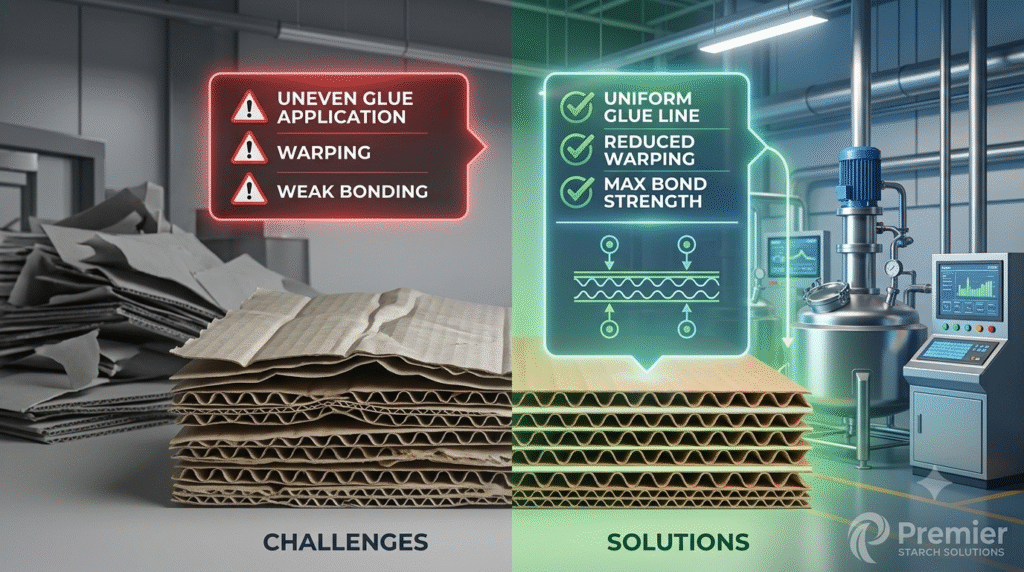
Modified starch adhesives play a critical role in corrugated packaging production.
Benefits include:
- Stronger board bonding
- Reduced adhesive consumption
- Improved machine speed
- Better moisture control
Solutions like Stardex® 840 Hot Pasting Gum Powder and Stargel® 5060 Cold Soluble Pasting Gum Powder are widely used in corrugation plants for consistent bonding performance.
Abrasive Manufacturing
The abrasive industry uses modified starch and dextrins as binders during coated abrasive production.
Key benefits:
- Uniform grain bonding
- Controlled coating consistency
- Improved durability
Products developed for coated abrasives help manufacturers maintain production precision while reducing formulation instability.
Paint & Coating Industry
Modified starches and dextrins are used in emulsion paints and coatings for:
- Improved texture
- Better suspension properties
- Enhanced film formation
- Controlled viscosity
Industrial-grade tapioca dextrin formulations are commonly used in paint manufacturing processes.
Mining Industry
In mining applications, dextrins are used in froth flotation and ore processing.
Advantages include:
- Better mineral separation
- Stable flotation performance
- Controlled reagent behaviour
Specialised mining-grade tapioca dextrins help improve process efficiency in mineral processing plants.
Paper Tube & Core Manufacturing
Modified starch adhesives are widely used for:
- Spiral paper tubes
- Paper cores
- Thermocouple paper tube cores
Benefits include:
- Strong bonding
- Faster curing
- Improved crush strength
- Better dimensional stability
Industrial adhesive powders specifically formulated for paper tube cores help maintain production consistency.
Foundry Chemical Industry
Maize yellow dextrin is frequently used in foundry chemical manufacturing due to its:
- Binding efficiency
- Controlled viscosity
- Better mould strength
It supports stable production performance in foundry operations.
How Quality Control Impacts Modified Starch Performance
Consistency is critical in industrial applications. Even small variations in:
- Moisture
- pH
- Solubility
- Viscosity
can affect final production quality.
Reliable manufacturers use:
- Brookfield viscosity testing
- BS flow cup analysis
- Batch-wise QC testing
- Solubility analysis
- Moisture and pH evaluation
This ensures predictable product performance across industrial production cycles.
Sustainable Advantages of Starch-Based Industrial Solutions
Industries are increasingly shifting toward biodegradable and plant-based alternatives.
Modified starches support sustainable manufacturing because they are:
- Renewable
- Non-toxic
- Biodegradable
- Safer compared to synthetic binders
This makes starch-based industrial products a preferred choice for companies focused on environmentally responsible production practices.
Choosing the Right Modified Starch Manufacturer
Selecting the right supplier is important for maintaining long-term production quality and supply reliability.
When evaluating suppliers, consider:
- Industry experience
- Product consistency
- Technical support
- R&D capabilities
- Ability to customise formulations
- Supply chain reliability
An experienced manufacturer can recommend application-specific solutions based on machinery type, production speed, and industry requirements.
Why Industries Trust Premier Starch
With more than 35 years of expertise, Premier Starch Products Pvt. Ltd. has established itself as a dependable partner for industrial starch solutions across India and overseas markets.
From corrugation adhesives and specialty dextrins to customised industrial formulations, the company combines in-house R&D, stringent quality testing, and application-focused innovation to support diverse manufacturing industries. Its solutions are engineered to deliver stable performance, production efficiency, and long-term reliability across demanding industrial environments.