In the corrugated packaging industry, adhesive performance directly impacts box strength, production speed, and overall manufacturing efficiency. Whether you’re operating a manual plant or a high-speed automatic corrugator, the quality of your adhesive can determine whether production runs smoothly or is interrupted by bonding failures, excessive downtime, or product rejections.
Choosing the right Corrugation adhesive starch is about more than simply sticking paper together. It involves selecting a formulation that delivers the right viscosity, fast penetration, stable bonding, and reliable performance under varying production conditions.
As an experienced corrugation adhesives manufacturer, Premier Starch has worked closely with corrugated box manufacturers for over three decades, helping them overcome common adhesive-related challenges through application-specific starch formulations.
Why Corrugation Adhesives Matter
Corrugation adhesives bond the linerboard to the fluted medium, forming the structure that gives corrugated boxes their strength. The adhesive must perform consistently throughout production while adapting to different paper grades, machine speeds, temperatures, and environmental conditions.
Even a minor variation in adhesive quality can affect:
- Board strength
- Bonding speed
- Machine efficiency
- Moisture control
- Waste generation
- Customer satisfaction
Understanding the most common adhesive problems makes it easier to improve production consistency.
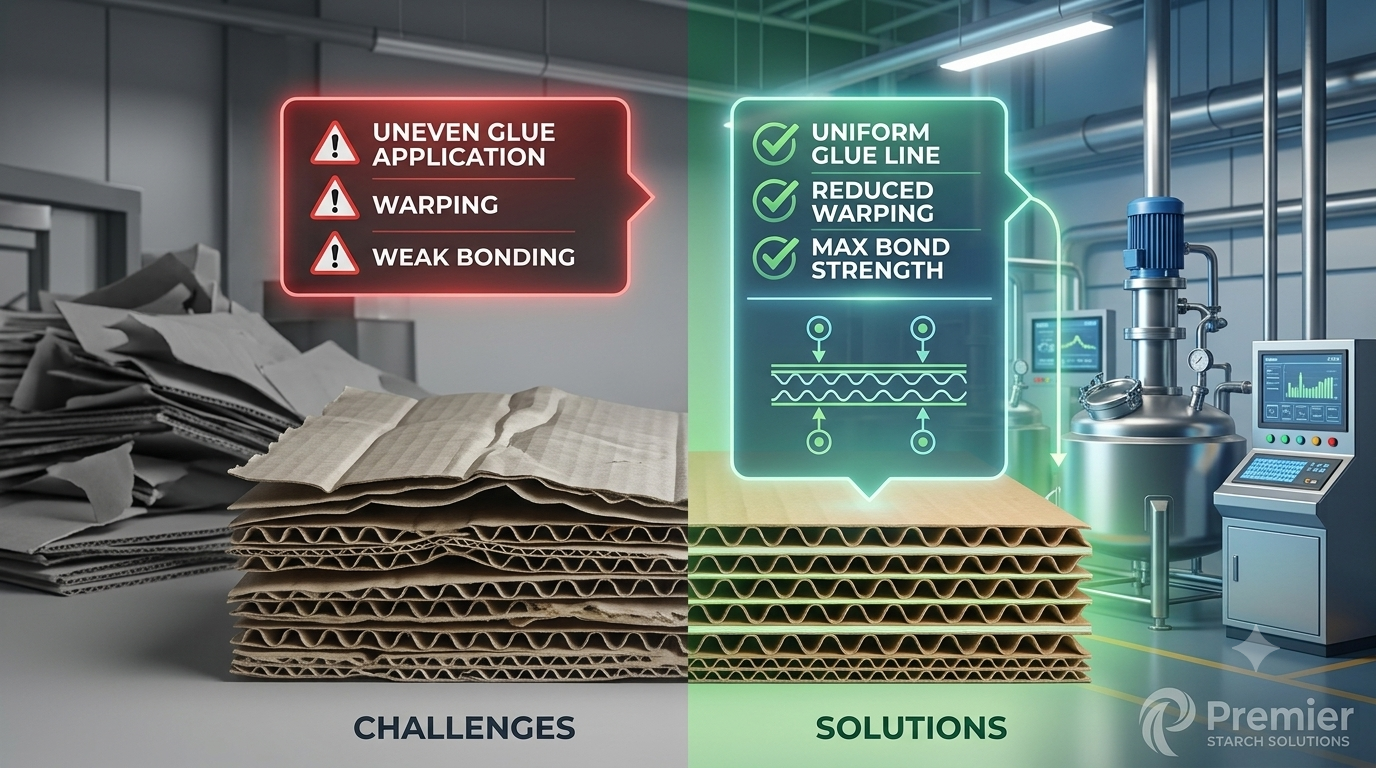
Common Challenges in Corrugation Adhesives
1. Poor Bond Strength
One of the most frequent issues in corrugated box manufacturing is weak adhesion between the flute and liner.
This can occur due to:
- Incorrect adhesive viscosity
- Low-quality starch
- Improper gelatinisation
- Incorrect machine temperature
- Excessive moisture in the adhesive
Weak bonding often results in board separation during conversion, transport, or storage, leading to rejected batches and increased production costs.
Solution
Use a properly formulated starch adhesive designed specifically for your plant type. High-quality modified starch formulations provide consistent penetration and strong fibre bonding, ensuring durable board strength.
For manufacturers using manual corrugation plants, Stargel® TS offers dependable bonding performance and easy preparation, making it suitable for everyday production requirements.
2. Adhesive Drying Too Slowly
Slow drying reduces production speed and creates bottlenecks, particularly in high-output facilities.
Common reasons include:
- Excess water content
- Incorrect starch concentration
- Low operating temperatures
- Poor adhesive formulation
When adhesives remain wet for too long, boards may warp or lose structural integrity.
Solution
Selecting an adhesive with faster setting characteristics improves throughput without compromising bond strength.
Plants requiring cold-soluble formulations can benefit from Stargel® 5060, which is designed for efficient preparation and reliable bonding across corrugated box manufacturing operations.
3. Adhesive Build-Up on Rollers
Excess adhesive accumulation on glue rolls affects application consistency and requires frequent cleaning.
Signs include:
- Uneven glue lines
- Excess starch consumption
- Machine stoppages
- Reduced production efficiency
Solution
Maintaining proper adhesive viscosity and using high-quality starch formulations significantly reduces build-up. Regular monitoring of pH, solids content, and viscosity also helps maintain consistent adhesive application throughout production.
4. Inconsistent Viscosity During Production
Many manufacturers experience fluctuations in adhesive thickness throughout a production shift.
This may happen because of:
- Temperature variations
- Incorrect mixing procedures
- Inconsistent raw materials
- Poor storage practices
Viscosity changes directly affect glue application and bonding quality.
Recommended Process Controls
| Challenge | Recommended Solution |
| Viscosity fluctuations | Monitor viscosity regularly using standard testing methods |
| Incorrect mixing | Follow recommended preparation procedures |
| Raw material inconsistency | Use batch-tested industrial starch products |
| Temperature changes | Maintain stable preparation and storage conditions |
Reliable adhesive performance begins with consistent raw material quality.
5. Excessive Adhesive Consumption
Using more adhesive than necessary increases manufacturing costs without improving board quality.
Typical causes include:
- Incorrect viscosity
- Uneven glue application
- Low bonding efficiency
- Poor machine calibration
Solution
Optimising adhesive formulation allows manufacturers to achieve strong bonding with controlled application rates, reducing starch consumption while maintaining board performance.
6. Machine Speed Limitations
As production speeds increase, conventional adhesives often fail to provide fast enough bonding.
This leads to:
- Delamination
- Poor flute adhesion
- Reduced productivity
- Increased rejects
Solution
High-speed corrugation plants require specialised formulations capable of rapid penetration and quick bond formation.
For semi-automatic operations, Stargel® 1120 is developed to deliver reliable performance while supporting faster production cycles.
7. Seasonal Changes Affecting Adhesive Performance
Humidity and temperature influence adhesive behaviour throughout the year.
Common seasonal issues include:
- Longer drying times during monsoons
- Increased viscosity during winter
- Faster water evaporation during summer
- Inconsistent bonding across shifts
Solution
Routine quality checks combined with plant-specific adhesive recommendations help maintain consistent production regardless of weather conditions.
Working with a knowledgeable corrugation adhesives manufacturer allows manufacturers to adjust formulations according to operating conditions.
Best Practices for Reliable Corrugation Adhesive Performance
Consistent production depends on both adhesive quality and process control.
Consider the following practices:
- Test adhesive viscosity before every production shift.
- Maintain recommended pH and moisture levels.
- Store starch products in dry, controlled environments.
- Follow standardised mixing procedures.
- Clean adhesive application systems regularly.
- Conduct routine machine calibration.
- Choose adhesive grades suited to your production speed.
Small operational improvements often result in significant gain0s in board quality and manufacturing efficiency.
Why Quality Control Makes the Difference
Reliable adhesive performance starts long before production begins.
At Premier Starch, every batch undergoes comprehensive testing for:
- Viscosity
- Moisture content
- pH
- Solubility
- Batch consistency
This quality-focused approach ensures that customers receive dependable Corrugation adhesive starch capable of delivering repeatable performance across different manufacturing environments.
Choosing the Right Corrugation Adhesive
Every corrugated box plant operates differently. Factors such as machine type, paper quality, production volume, and environmental conditions all influence adhesive selection.
Choosing a supplier that understands these variables can help manufacturers:
- Improve production efficiency
- Reduce adhesive consumption
- Minimise downtime
- Increase board strength
- Lower rejection rates
- Achieve consistent product quality
Rather than relying on one-size-fits-all formulations, application-specific starch adhesives provide better long-term value.
Conclusion
Corrugation adhesives play a far greater role than simply joining paper layers. They influence production speed, board quality, operating costs, and customer satisfaction. Addressing common issues such as poor bonding, viscosity fluctuations, slow drying, and excessive adhesive usage begins with selecting the right starch formulation and maintaining proper process controls.
As a trusted corrugation adhesives manufacturer, Premier Starch develops specialised starch-based adhesive solutions that support reliable performance across manual, semi-automatic, and high-speed corrugation plants. Backed by in-house R&D, stringent quality testing, and decades of industry expertise, the company helps manufacturers achieve consistent bonding and efficient production with confidence.