Paper tubes and cores are an essential part of modern manufacturing, serving industries such as textiles, paper, films, packaging, construction, thermocouples, and specialty tapes. While these products may appear simple, their performance depends heavily on one critical component the adhesive that binds multiple layers of paper into a strong, durable structure.
Selecting the right modified starch adhesives for paper tube core production can directly influence bonding strength, winding speed, moisture resistance, and the overall quality of the finished product. As manufacturers strive for higher productivity and consistent product performance, starch based adhesive systems have become the preferred choice due to their reliability, sustainability, and cost effectiveness.
In this guide, we’ll explore how industrial adhesives work in paper tube manufacturing, why starch-based formulations are widely preferred, and what factors manufacturers should consider when choosing the right adhesive.
Why Adhesives Matter in Paper Tube & Core Manufacturing?
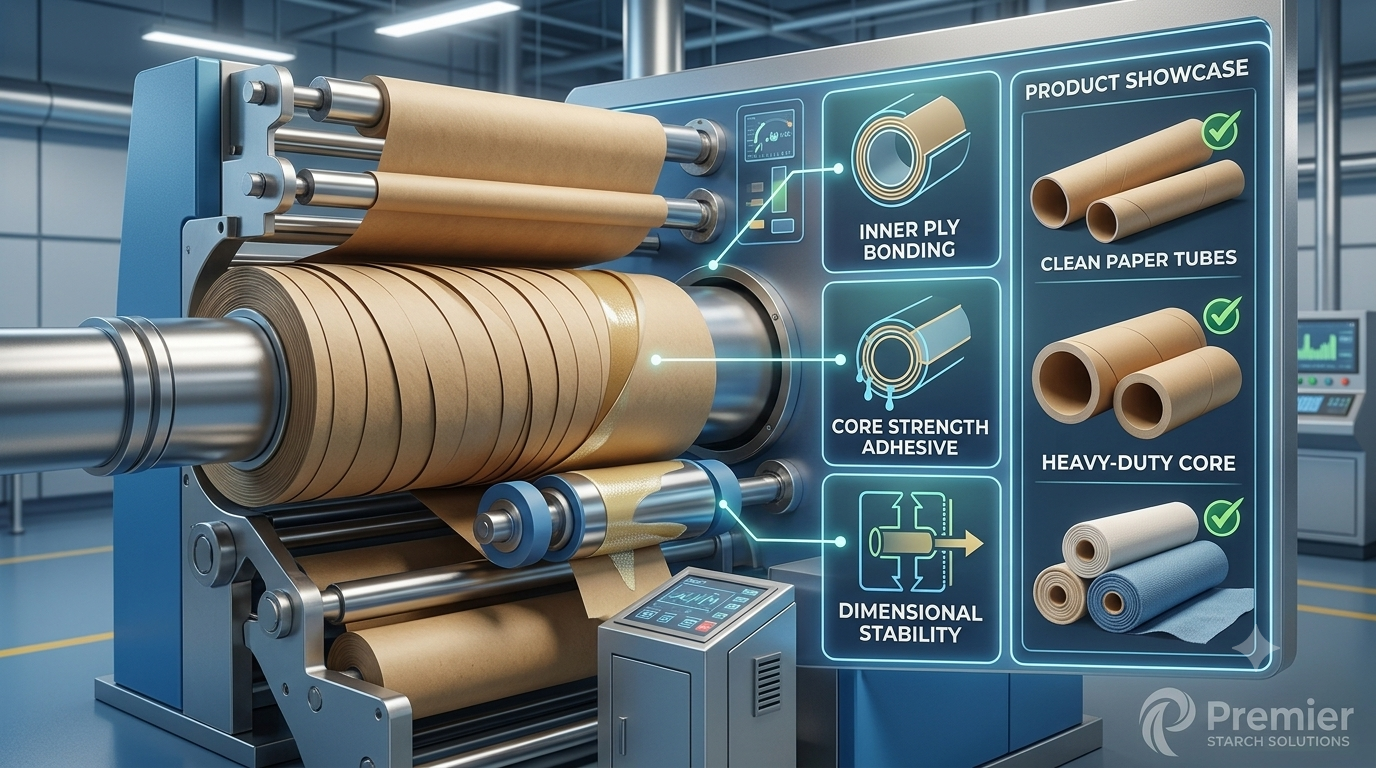
Paper tubes are manufactured by winding multiple layers of kraft paper or specialty paper together under controlled pressure. The adhesive is responsible for creating a permanent bond between every layer while maintaining structural integrity during production and end use.
A high-performance adhesive should provide:
- Strong fibre-to-fibre bonding
- Fast setting for high production speeds
- Uniform viscosity throughout production
- Easy application with minimal wastage
- Stable performance across varying environmental conditions
- Clean processing without excessive residue
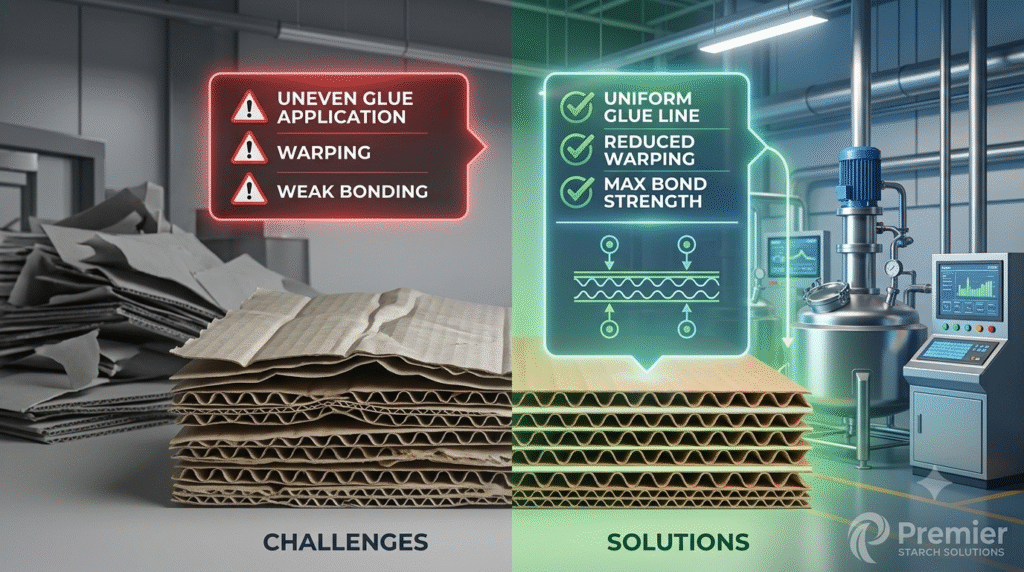
Even a slight inconsistency in adhesive quality can result in weak cores, delamination, reduced load-bearing capacity, or increased production downtime.
Why Starch-Based Adhesives Have Become the Industry Standard?
Manufacturers increasingly prefer starch based adhesives powder for paper tube core applications because they offer an excellent combination of performance, economy, and environmental sustainability.
Unlike many synthetic adhesives, starch-based formulations are derived from renewable plant sources, making them biodegradable and safer to handle while still delivering excellent bonding strength.
Some of their key advantages include:
- Excellent adhesion to paper fibres
- High solid content for stronger bonding
- Good machinability on high-speed winding machines
- Consistent viscosity during production
- Reduced production costs
- Environmentally responsible formulation
These characteristics make modified starch adhesives suitable for both standard paper cores and specialised industrial applications.
Types of Industrial Adhesives Used for Paper Tube Manufacturing
Different manufacturing requirements call for different adhesive technologies.
| Adhesive Type | Typical Application | Advantages |
| Modified Starch Adhesives | Paper tubes, cores, thermocouple tubes | Strong bonding, economical, biodegradable |
| Dextrin-Based Adhesives | Specialty paper applications | Fast tack and smooth application |
| Synthetic Adhesives | Moisture-resistant applications | Higher chemical resistance but increased cost |
| Hybrid Adhesive Systems | Custom industrial applications | Tailored performance characteristics |
Among these options, modified starch remains one of the most widely used solutions due to its balance of strength, processing efficiency, and sustainability.
What Makes Modified Starch Adhesives So Effective?
Modified starch is produced by altering natural starch to improve its functional properties for industrial manufacturing.
These modifications help achieve:
Improved Bond Strength
Modified starch penetrates paper fibres effectively, creating durable interlayer adhesion that withstands mechanical stress during converting, transportation, and storage.
Faster Drying
Modern production lines require adhesives that set quickly without slowing manufacturing speeds.
Properly formulated modified starch allows faster winding while maintaining consistent bonding quality.
Stable Viscosity
Viscosity consistency is critical in automated manufacturing.
An adhesive that becomes too thin or too thick during production can affect coating uniformity and bonding performance.
Quality-controlled starch formulations maintain predictable viscosity throughout the production cycle.
Better Machine Performance
Stable adhesive properties reduce nozzle clogging, uneven application, and unnecessary machine cleaning, allowing smoother operations and reduced downtime.
Factors to Consider When Choosing Paper Tube Core Adhesives
Every paper tube application has unique performance requirements.
Manufacturers should evaluate the following factors before selecting an adhesive.
Tube Diameter and Wall Thickness
Heavier-duty tubes require stronger bonding systems capable of maintaining structural integrity under higher loads.
Production Speed
High-speed winding machines need adhesives with rapid wet tack and controlled drying characteristics.
End Application
Paper cores used in textile winding, packaging films, thermocouples, or industrial rolls each require different performance characteristics.
Environmental Conditions
Humidity and storage conditions can influence adhesive behaviour and should always be considered during formulation selection.
Equipment Compatibility
The adhesive should perform consistently with existing machinery without requiring extensive process modifications.
Importance of Consistent Quality Control
Industrial adhesive performance depends not only on formulation but also on manufacturing consistency.
Reliable manufacturers perform batch-wise testing to ensure:
- Controlled viscosity
- Moisture analysis
- pH stability
- Solubility testing
- Performance validation
This level of quality assurance helps manufacturers achieve predictable production results and minimise product variation.
Specialised Solutions for Paper Tube & Thermocouple Manufacturing
Not all paper tube applications have identical requirements.
For example, thermocouple paper tubes demand excellent dimensional stability, reliable bonding, and consistent processing performance.
Products such as Stardex® 2155-H are specifically developed for thermocouple paper tube applications, while Stardex® 2155-Tube is designed to deliver dependable bonding performance across general paper tube and core manufacturing processes. Using purpose-built adhesive formulations helps improve productivity while maintaining consistent finished product quality.
Sustainability Is Driving the Future of Industrial Adhesives
Sustainability is becoming a major purchasing consideration across manufacturing industries.
Plant-derived starch adhesives help manufacturers:
- Reduce dependence on petroleum-based chemicals
- Improve workplace safety
- Support environmentally responsible manufacturing
- Meet evolving sustainability initiatives
As industries continue shifting towards greener production methods, starch-based adhesive technologies are expected to play an even larger role in paper converting applications.
Final Thoughts
Choosing the right adhesive is about much more than bonding paper layers together. It directly impacts production efficiency, product quality, operational costs, and long-term reliability.
Modern modified starch adhesives for paper tube core manufacturing provide manufacturers with an ideal combination of strong bonding performance, process consistency, environmental sustainability, and cost-effectiveness. When supported by rigorous quality control and application-specific formulation, starch-based adhesives continue to remain one of the most trusted solutions for paper tube and core production.
Why Manufacturers Trust Premier Starch?
With over three decades of experience in industrial starch technology, Premier Starch Products Pvt. Ltd. develops application-specific starch solutions that help manufacturers improve productivity without compromising quality. From standard paper tube production to specialised thermocouple applications, our R&D-backed formulations are designed for consistent performance across diverse manufacturing environments. Whether you’re scaling production or looking to optimise adhesive efficiency, our technical team works closely with customers to recommend the right solution for their process.