As industries across the world continue to prioritise sustainability, manufacturers are rethinking the materials used in their production processes. One area witnessing a significant transformation is the replacement of synthetic binders with renewable, biodegradable alternatives. Among these, industrial starch products have emerged as a reliable solution that balances environmental responsibility with high-performance manufacturing.
From corrugated packaging and paper tubes to abrasives, paints, foundry chemicals, and mining applications, starch-based binders are proving that sustainable materials no longer require compromising on quality or efficiency. With advancements in starch modification technology, today’s starch derivatives offer excellent adhesion, controlled viscosity, consistent performance, and compatibility with demanding industrial processes.
Why Industries Are Moving Away from Synthetic Binders
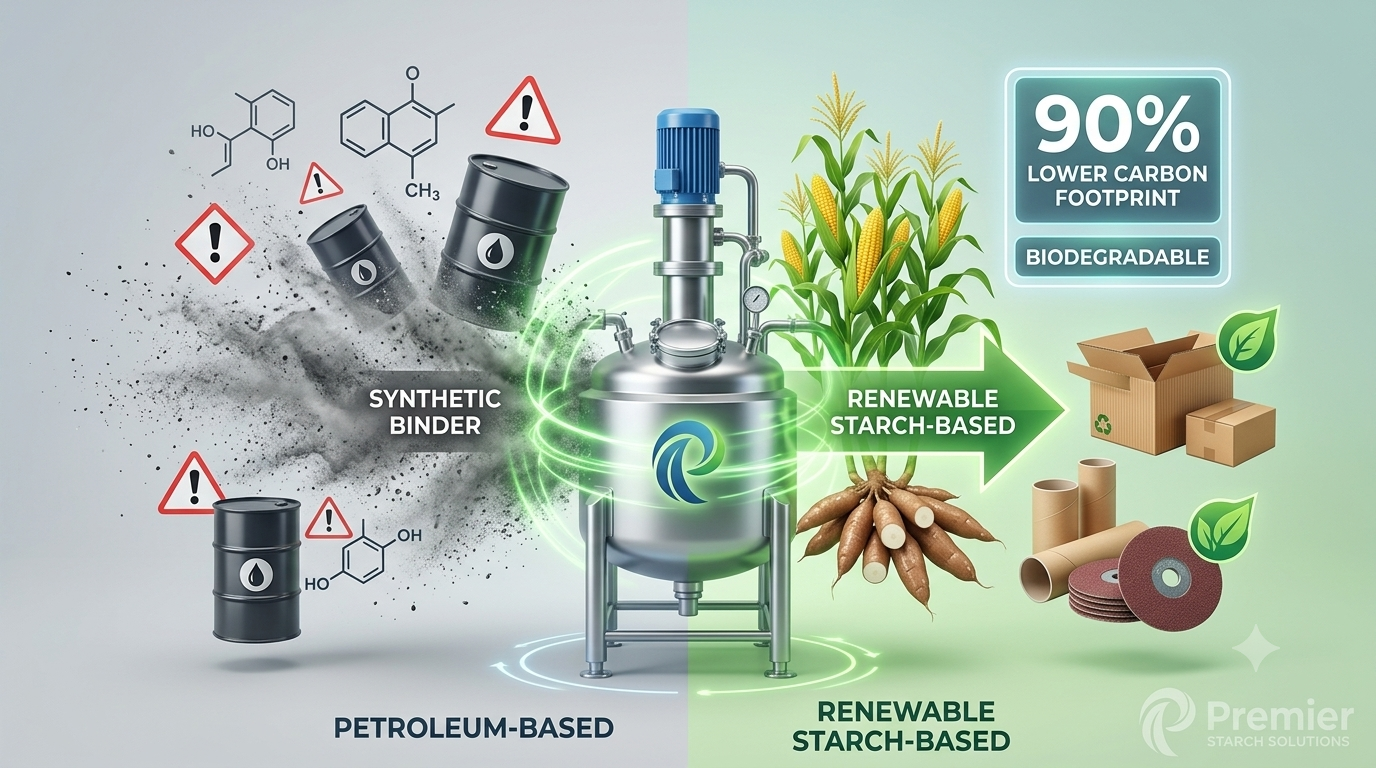
For decades, synthetic binders have been widely used because of their durability and process stability. However, increasing environmental regulations, rising raw material costs, and growing demand for eco-friendly manufacturing have encouraged industries to explore renewable alternatives.
Some common challenges associated with synthetic binders include:
- Dependence on petroleum-based raw materials
- Higher environmental footprint
- Limited biodegradability
- Increasing compliance requirements
- Rising production costs due to volatile raw material prices
This shift has created new opportunities for manufacturers looking to adopt starch based technologies that are both effective and sustainable.
What Makes Starch-Based Binders a Sustainable Choice?
Unlike synthetic alternatives, starch is derived from renewable plant sources such as tapioca and maize. Through specialised modification processes, starch can be engineered to meet specific industrial performance requirements without losing its eco-friendly characteristics.
Modern starch-based binders offer:
- Excellent bonding strength
- Controlled drying characteristics
- Stable viscosity during production
- Improved process consistency
- Reduced environmental impact
- Biodegradable and non-toxic formulation
These qualities make starch an ideal material for industries seeking greener manufacturing practices while maintaining production efficiency.
Synthetic Binders vs Starch-Based Solutions
| Feature | Synthetic Binders | Starch-Based Solutions |
| Raw Material | Petroleum-based | Renewable plant sources |
| Environmental Impact | Higher | Lower |
| Biodegradability | Limited | Excellent |
| Process Customisation | Moderate | Highly customisable |
| Industrial Performance | Good | Excellent with modified formulations |
| Sustainability | Low | High |
Rather than simply replacing synthetic materials, modified starch technologies provide manufacturers with an opportunity to improve operational efficiency while supporting sustainability goals.
How Modern Industrial Starch Products Deliver High Performance
Many people associate starch with basic food applications, but industrial starch technology has evolved significantly over the past few decades.
Today’s industrial starch products are specifically engineered to deliver predictable performance under challenging manufacturing conditions. Their properties can be customised based on:
- Production machinery
- Application temperature
- Drying speed
- Required bonding strength
- Moisture resistance
- Industry-specific processing requirements
This flexibility allows manufacturers to optimise production without making major changes to existing equipment.
Industries Benefiting from Starch-Based Binders
The versatility of starch derivatives has expanded their use across multiple industrial sectors.
Corrugated Packaging
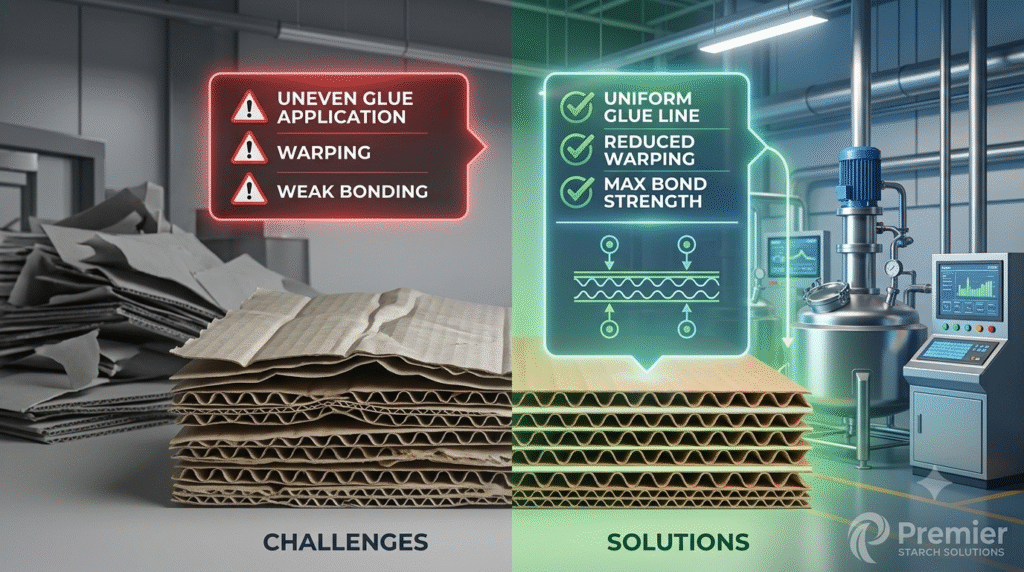
High-performance corrugation adhesives improve board strength while supporting high-speed production lines. Products such as Stargel® 5060, Stargel® TS, and Stardex® 840 are developed to suit manual, semi-automatic, and automatic corrugation plants, providing reliable bonding and consistent application.
Paper Tubes and Cores
Paper tube manufacturing requires adhesives that provide strong bonding without compromising production speed. Solutions such as Stardex® 2155-Tube and Stardex® 2155-H are designed specifically for these demanding applications, delivering dependable performance across various tube and core manufacturing processes.
Paint and Coating Industry
Modified starches and dextrins contribute to improved pigment suspension, viscosity control, and formulation stability in decorative and industrial coatings. Products like Stardex® 2155-AP SPL support manufacturers seeking efficient and sustainable raw material alternatives.
Abrasive Manufacturing
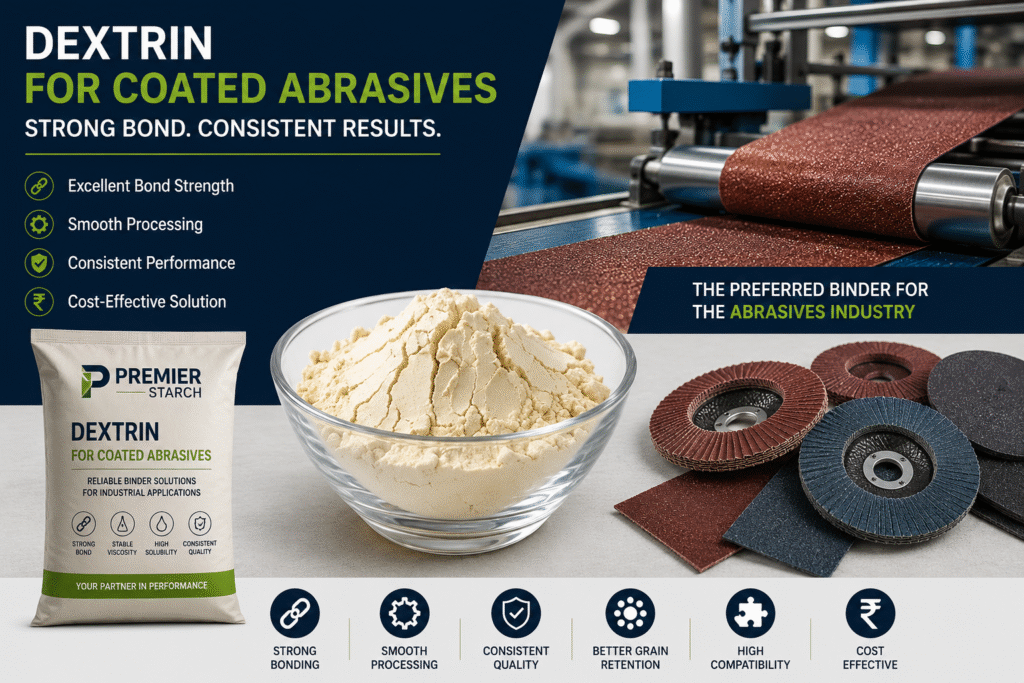
In coated abrasive production, consistent binder performance is essential for grain adhesion and product durability. Stardex® 2155-GNL has been developed to deliver reliable bonding characteristics that meet the stringent requirements of abrasive manufacturers.
Mining Applications
Mining operations increasingly rely on starch derivatives for flotation and mineral processing. Stardex® 2155-Mining offers stable performance while helping manufacturers incorporate renewable materials into their processing systems.
Foundry Chemicals
Foundry manufacturers also benefit from starch-based binders that offer dependable process performance. Stardex® 2155 Maize Yellow provides excellent consistency for specialised foundry chemical applications.
Why Product Consistency Matters
Selecting a sustainable binder is only part of the equation. Consistency from batch to batch is equally important for maintaining production quality.
Reliable manufacturers perform rigorous quality testing, including:
- Viscosity analysis
- Moisture testing
- pH evaluation
- Solubility assessment
- Batch-wise quality control
These parameters ensure every shipment performs predictably on the customer’s production line, reducing downtime and minimising process variations.
Working with the Right Modified Starch & Dextrin Supplier
Choosing the right modified starch & dextrin supplier involves much more than comparing prices. Manufacturers should evaluate a supplier’s technical expertise, production capabilities, quality systems, and ability to develop customised formulations.
Consider the following factors before selecting a supplier:
| Evaluation Factor | Why It Matters |
| In-house R&D | Enables customised product development |
| Quality Control | Ensures consistent product performance |
| Technical Support | Assists during plant trials and optimisation |
| Manufacturing Capacity | Supports uninterrupted supply |
| Industry Experience | Provides application-specific expertise |
A supplier with extensive industrial experience can recommend formulations tailored to specific machinery, production conditions, and performance expectations.
Sustainability Without Compromising Performance
One of the biggest misconceptions about sustainable materials is that they sacrifice strength or productivity. Modern starch technologies demonstrate the opposite.
Today’s modified starches and dextrins provide:
- Reliable industrial performance
- Excellent bonding characteristics
- Reduced environmental footprint
- Compatibility with high-speed manufacturing
- Long-term process stability
- Support for sustainable manufacturing initiatives
As industries continue moving towards greener production practices, starch-based binders are becoming an increasingly practical and commercially viable alternative to synthetic materials.
Conclusion
Sustainability has become an essential consideration across modern manufacturing, and the demand for renewable raw materials continues to grow. With advancements in starch modification technology, manufacturers no longer have to choose between environmental responsibility and production efficiency.
From packaging and paper tubes to mining, paints, abrasives, and foundry chemicals, industrial starch products are helping businesses improve performance while supporting cleaner manufacturing practices. Partnering with an experienced modified starch & dextrin supplier ensures access to customised formulations, consistent product quality, and technical expertise that keeps production running efficiently.
Looking for Sustainable Industrial Starch Solutions?
For over 35 years, Premier Starch Products Pvt. Ltd. has been helping manufacturers replace conventional binders with performance-driven starch-based alternatives. Backed by in-house research, stringent quality control, and application-specific expertise, Premier Starch develops customised solutions for industries that demand consistency, reliability, and sustainability. Whether you’re optimising an existing process or developing a new formulation, our technical team is ready to recommend the right starch solution for your manufacturing requirements.