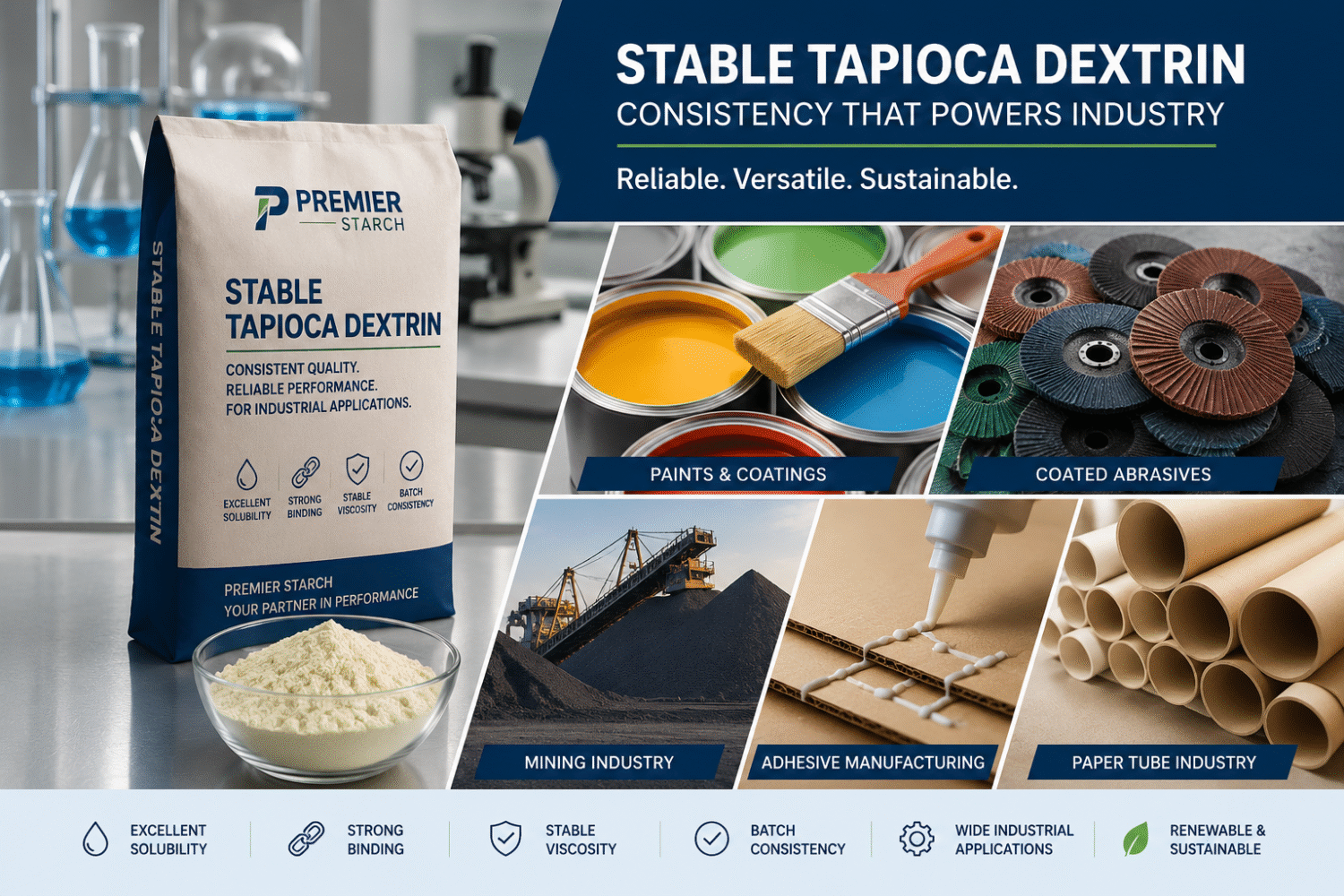
When it comes to industrial starch derivatives, consistency is just as important as performance. Manufacturers across industries rely on raw materials that deliver predictable results, whether they are producing paints, coated abrasives, paper tubes, adhesives, or mining chemicals. This is where stable tapioca dextrin stands out.
At Premier Starch, we have spent more than three decades developing starch-based solutions that meet the evolving requirements of modern manufacturing. As a trusted tapioca dextrin manufacturer, we produce specialised grades designed to provide reliable viscosity, superior bonding, excellent solubility, and consistent processing performance across multiple industrial applications.
What is Stable Tapioca Dextrin?
Stable tapioca dextrin is a modified starch derivative produced by carefully processing tapioca starch under controlled conditions. Unlike conventional dextrins, stable grades are formulated to maintain consistent physical and chemical properties from batch to batch, making them suitable for demanding industrial processes.
Its balanced characteristics make it an ideal ingredient wherever manufacturers require dependable adhesion, controlled viscosity, improved dispersion, and enhanced workability.
Some of its key characteristics include:
- Excellent water solubility
- Stable viscosity throughout production
- Strong binding properties
- Good film-forming ability
- Low dust generation during handling
- Reliable shelf stability
- Compatibility with various industrial formulations
These properties make stable tapioca dextrin a preferred material for manufacturers looking to improve product consistency without compromising production efficiency.
Why Stability Matters in Industrial Manufacturing?
In industrial production, even minor variations in raw materials can affect the final product. Changes in viscosity, moisture content, or bonding performance may lead to inconsistent quality, increased wastage, machine downtime, or customer complaints.
A stable dextrin helps manufacturers minimise these risks by delivering predictable performance throughout the production cycle.
| Manufacturing Requirement | Benefit of Stable Tapioca Dextrin |
| Consistent viscosity | Uniform processing |
| Strong bonding | Improved product strength |
| Better dispersion | Smooth formulations |
| Reliable drying | Faster production cycles |
| Controlled moisture | Better storage stability |
| Batch consistency | Reduced production variation |
This consistency is especially valuable for industries operating high-volume production lines.
Industrial Applications of Stable Tapioca Dextrin
One of the biggest advantages of stable tapioca dextrin is its versatility. A single product family can support multiple industries with application-specific formulations.
Paint and Coating Industry
Paint manufacturers require raw materials that improve pigment dispersion, application properties, and storage stability without affecting finish quality.
Premier Starch has developed specialised grades such as Stardex® 2155 AP SPL, specifically formulated for paint manufacturing applications where consistent performance is critical.
These formulations help improve:
- Pigment suspension
- Flow properties
- Adhesion
- Film formation
- Batch consistency
For manufacturers producing decorative and industrial coatings, selecting the right dextrin grade can contribute to better product quality and smoother processing.
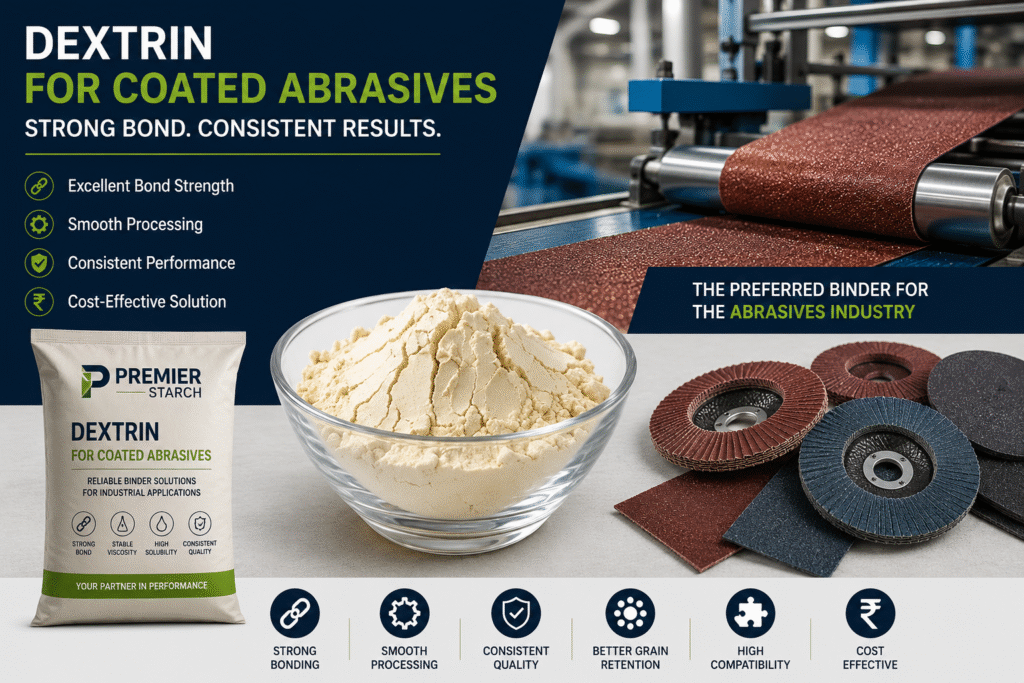
Coated Abrasives Manufacturing
The coated abrasives industry demands binders that can securely hold abrasive grains while maintaining production efficiency.
Stable tapioca dextrin offers:
- Strong adhesive strength
- Excellent coating uniformity
- Better flexibility
- Consistent curing behaviour
- Improved production stability
These characteristics help manufacturers produce high-quality abrasive products with dependable performance.
Mining Industry
Mining operations require specialised dextrin formulations such as Stable tapioca dextrin that perform effectively under challenging processing conditions.
Stable tapioca dextrin is commonly used for:
- Mineral processing
- Froth flotation
- Binder applications
- Process stability
- Improved operational consistency
Industrial-grade formulations provide reliable performance while supporting efficient mineral recovery processes.
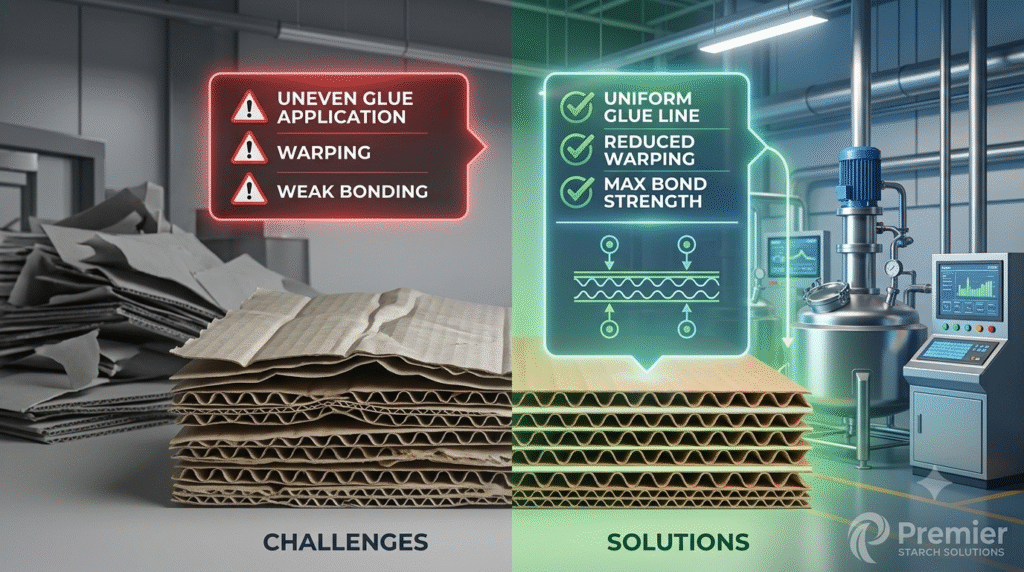
Adhesive Manufacturing
Many starch-based adhesive manufacturers rely on stable dextrin because of its:
- Excellent bonding capability
- Controlled viscosity
- Easy mixing
- Good spreadability
- Improved drying characteristics
These advantages make it suitable for various industrial adhesive formulations.
Why Manufacturers Prefer Tapioca Based Dextrin?
Compared to several conventional starch derivatives, tapioca-based dextrin offers an attractive balance of performance and sustainability.
Some of its advantages include:
- Derived from renewable plant sources
- Biodegradable
- Low odour
- Easy handling
- Excellent compatibility with industrial formulations
- Cost-effective processing aid
These qualities make it suitable for manufacturers seeking dependable starch based alternatives.
Premier Starch’s Approach to Manufacturing Stable Tapioca Dextrin
Manufacturing a reliable dextrin is not simply about processing starch it requires careful control throughout production.
At Premier Starch, every batch undergoes quality evaluation using in-house testing facilities to ensure it meets strict industrial requirements.
Our quality process includes:
- Viscosity testing
- Moisture analysis
- pH testing
- Solubility evaluation
- Batch-wise quality control
- Performance validation before dispatch
This systematic approach helps deliver products that customers can rely on for long-term manufacturing consistency.
Choosing the Right Grade for Your Industry
Different industries require different performance characteristics. Selecting the appropriate dextrin depends on factors such as:
- End application
- Required bonding strength
- Processing temperature
- Drying speed
- Machinery type
- Production volume
Rather than using a one-size-fits-all solution, Premier Starch develops specialised grades to match specific industrial requirements.
Whether the requirement is for paints, coated abrasives, mining, adhesives, or paper conversion industries, choosing the correct formulation contributes significantly to production efficiency and product quality.
Why Industrial Buyers Choose Premier Starch
For over 35 years, Premier Starch has been supplying starch-based industrial products to manufacturers across India and international markets.
Customers value Premier Starch because of:
- More than three decades of manufacturing expertise
- Dedicated in-house R&D and testing laboratory
- Consistent batch quality
- Industry-specific product development
- Reliable supply capabilities
- Technical support for product selection and plant trials
This combination of manufacturing experience and application knowledge enables industries to source dependable starch solutions tailored to their production needs.
Conclusion
As industries continue to demand higher productivity and better product consistency, the importance of reliable raw materials continues to grow. Stable tapioca dextrin has become an essential ingredient across multiple manufacturing sectors because it combines dependable performance with versatility and sustainability.
As an experienced tapioca dextrin manufacturer, Premier Starch continues to develop specialised formulations that help manufacturers optimise production, improve product quality, and achieve consistent results across a wide range of industrial applications.
If your manufacturing process requires a starch-based solution engineered for reliability, Premier Starch’s technical team can recommend a formulation suited to your specific production requirements and application needs.