The paint and coatings industry depends heavily on formulation stability, application consistency, and cost-effective raw materials. Whether manufacturing decorative paints, industrial coatings, primers, or specialty finishes, achieving the right balance of viscosity, adhesion, pigment suspension, and film formation is critical to product performance.
Among the many additives used in paint formulations, starch derivatives and dextrins have emerged as valuable functional ingredients. Today, manufacturers increasingly rely on dextrin for paint industry applications because it offers a combination of performance, sustainability, and processing advantages that support modern coating requirements.
The Growing Role of Starch-Based Materials in Paint Manufacturing
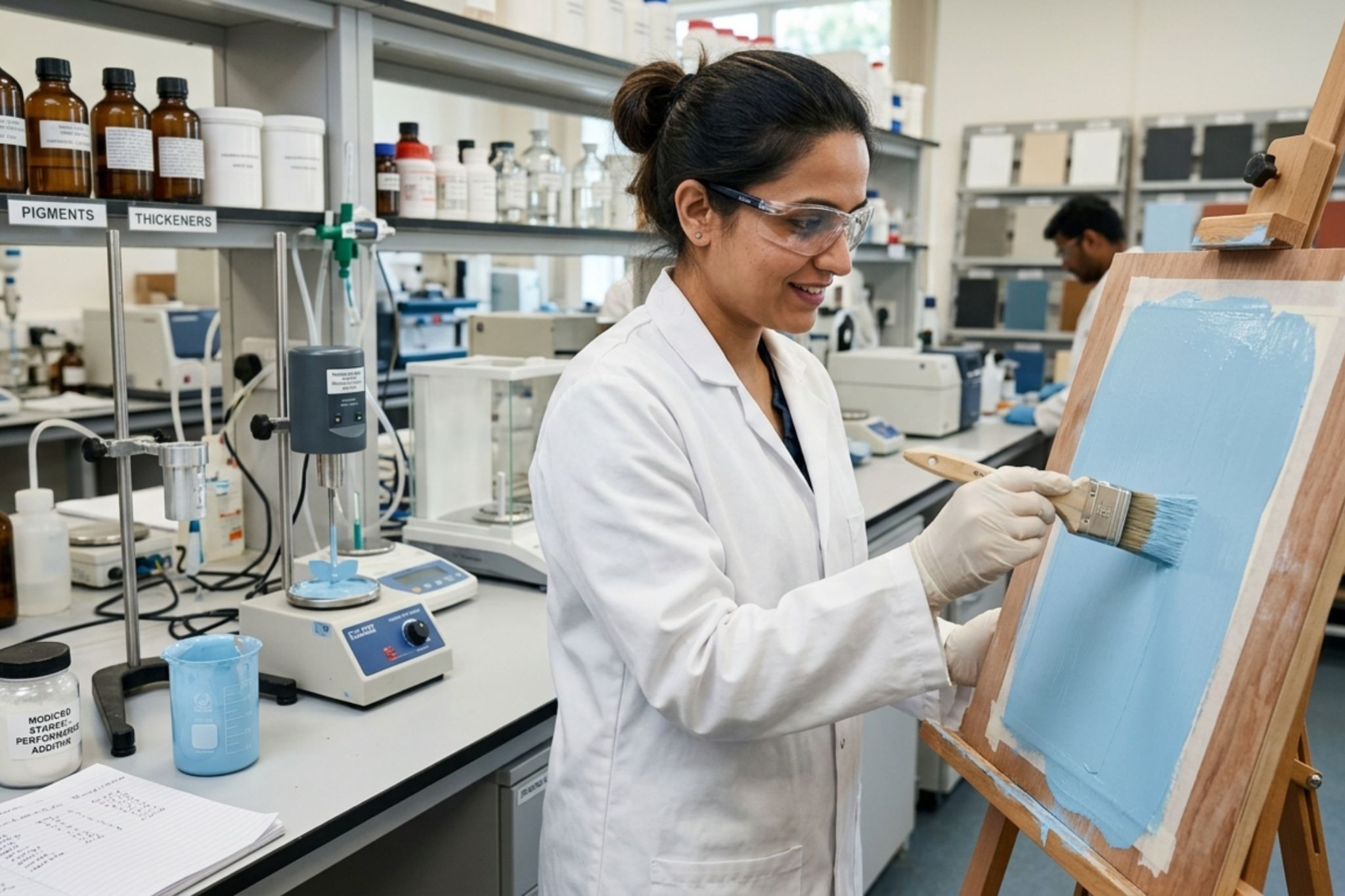
Paint formulations are complex systems consisting of pigments, binders, solvents, fillers, and performance additives. Every component influences the final product’s behaviour during manufacturing, storage, and application.
Modified starches and dextrins are widely used as:
- Rheology modifiers
- Binding agents
- Pigment suspension aids
- Thickening agents
- Stabilising additives
- Cost-effective formulation enhancers
As industries move towards more environmentally responsible manufacturing, plant-based starch derivatives are gaining attention as sustainable alternatives to synthetic additives.
Why Dextrins Are Used in Paint Formulations?
Dextrins are starch-derived products produced through controlled modification processes. Their functional characteristics make them suitable for a variety of coating systems.
Key Benefits of Dextrins in Paint Manufacturing
| Performance Requirement | Contribution of Dextrins |
| Viscosity Control | Improves formulation consistency |
| Pigment Dispersion | Helps maintain uniform distribution |
| Stability | Reduces settling during storage |
| Film Formation | Supports smoother coating finishes |
| Workability | Enhances ease of application |
| Cost Optimisation | Improves formulation economics |
These advantages explain why many manufacturers use dextrin for emulsion paints and other coating applications where consistent performance is essential.
Improved Viscosity Control and Application Properties
One of the biggest challenges in paint manufacturing is maintaining optimal viscosity throughout production and storage.
If viscosity is too low:
- Paint may sag during application
- Pigments may settle quickly
- Coverage can become inconsistent
If viscosity is too high:
- Pumping becomes difficult
- Application suffers
- Production efficiency decreases
Modified starches help maintain stable rheological behaviour, allowing paints to flow smoothly while retaining sufficient body for uniform application.
Enhanced Pigment Suspension
Pigment settling is a common issue in paint storage. Poor suspension can result in:
- Uneven colour distribution
- Difficult re-dispersion
- Product inconsistency
Specialised dextrins improve pigment-holding capability, helping maintain a homogeneous formulation throughout the product’s shelf life.
This contributes to better customer experience and more predictable coating performance.
Supporting Emulsion Paint Manufacturing
Modern decorative coatings require stability, smooth finish, and consistent application characteristics.
When selecting dextrin for emulsion paints, manufacturers typically look for materials that can:
- Improve formulation stability
- Assist pigment dispersion
- Enhance texture and flow
- Support uniform coating appearance
- Maintain performance during storage
These properties help manufacturers achieve reliable product quality while optimising production efficiency.
Sustainable Advantages of Starch Based Additives
Environmental regulations and sustainability goals are reshaping the coatings industry.
Compared with many synthetic additives, starch derived materials offer several environmental benefits:
- Derived from renewable resources
- Biodegradable in nature
- Lower environmental impact
- Reduced dependency on petrochemical-based materials
For manufacturers seeking greener formulations, starch-based solutions provide an attractive alternative without compromising functionality.
Consistency Matters in Industrial Paint Production
Industrial paint manufacturers require raw materials that deliver repeatable performance from batch to batch.
Variations in:
- Moisture content
- Solubility
- pH
- Viscosity
can affect production outcomes and final product quality.
This is why reliable suppliers invest heavily in quality control testing and process standardisation to ensure predictable performance across every batch.
For specialised coating applications, products such as Stardex® 2155-AP SPL are developed specifically to support paint manufacturing requirements where consistency and process stability are critical.
Choosing the Right Dextrin for Paint Applications
Not all dextrins perform identically. Selection depends on several factors:
Considerations When Choosing a Paint-Grade Dextrin
- Paint type and formulation
- Required viscosity profile
- Storage stability requirements
- Manufacturing process conditions
- Desired finish characteristics
- Compatibility with other formulation ingredients
Working with an experienced supplier can help identify the most suitable grade for specific coating requirements.
Future Trends in Paint and Coating Formulations
As the coatings industry continues evolving, manufacturers are increasingly focused on:
- Sustainable raw materials
- Improved production efficiency
- Better storage stability
- Reduced formulation costs
- Enhanced environmental compliance
Modified starches and dextrins are expected to play an increasingly important role in achieving these objectives while maintaining the performance standards demanded by modern paint formulations.
Conclusion
The use of dextrin for paint industry applications continues to grow as manufacturers seek reliable, sustainable, and performance-driven formulation ingredients. From viscosity control and pigment suspension to improved stability and process efficiency, starch-derived additives offer practical advantages across a wide range of coating systems.
Similarly, the demand for dextrin for emulsion paints is increasing as producers look for solutions that support smooth application, consistent quality, and long-term storage stability. With the right grade selection and quality assurance, modified starches can significantly enhance overall paint performance while supporting more sustainable manufacturing practices.
Partner with Premier Starch for Reliable Paint-Grade Dextrins
With over three decades of manufacturing expertise, Premier Starch develops specialised starch derivatives engineered for demanding industrial applications. Our technical team works closely with paint and coating manufacturers to deliver dependable performance, batch-to-batch consistency, and formulation support that helps optimise production outcomes. Whether you’re refining an existing coating system or developing a new formulation, we can help identify the right starch-based solution for your requirements.