Paper tubes and cores are widely used across packaging, textiles, thermocouple manufacturing, films, tapes, and industrial winding applications. However, one recurring challenge for manufacturers is maintaining tube strength and dimensional stability in high-humidity warehouse environments. Excess moisture absorption can weaken bonding strength, soften the core structure, and lead to deformation during storage or transportation.
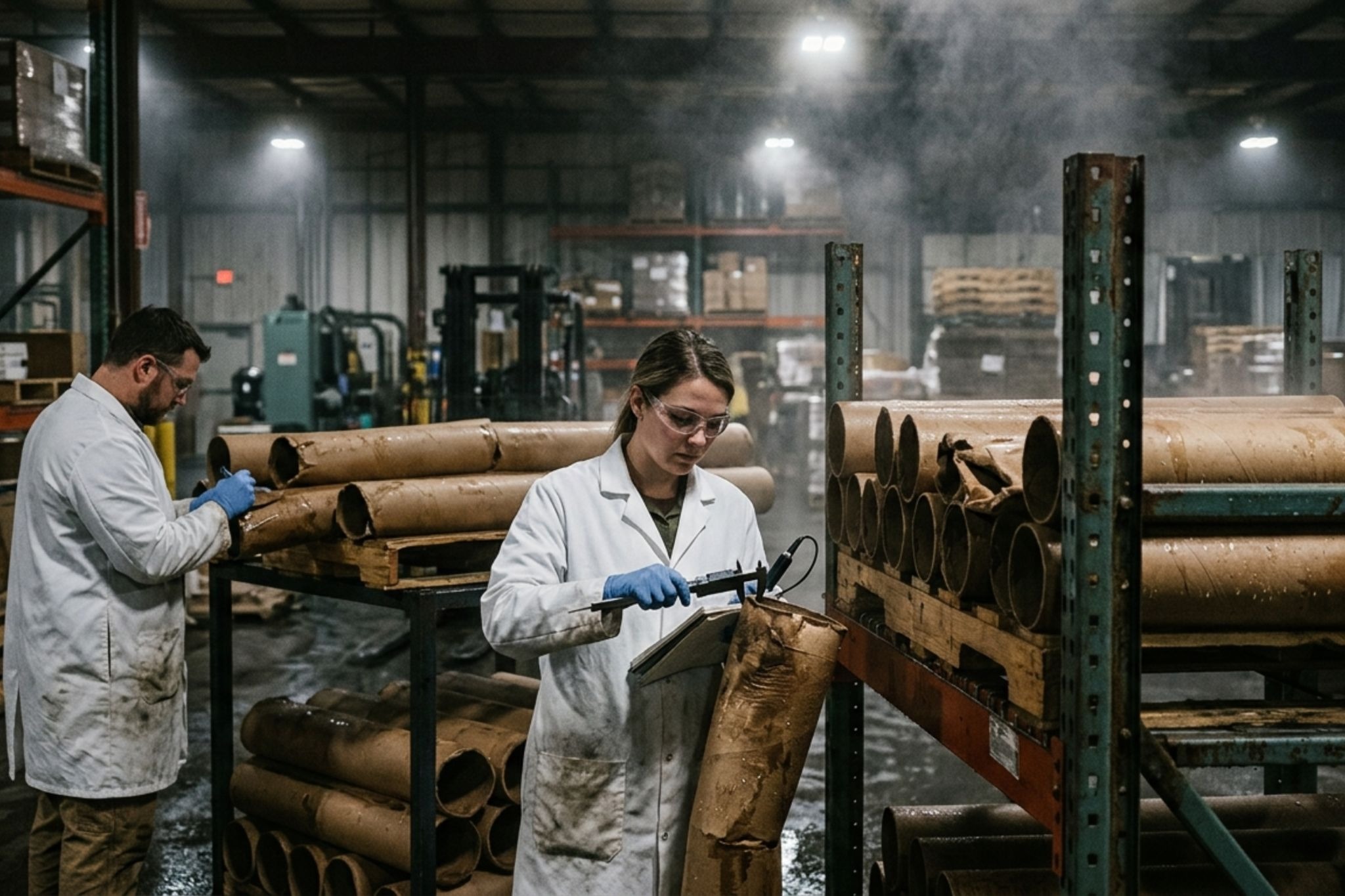
To evaluate how starch-based adhesive systems perform under such demanding conditions, a field test was conducted on starch bonded tubes stored in extreme high-humidity warehouse environments over an extended period. The results highlighted the importance of choosing the right modified starch adhesives for paper tube core applications and using stable dextrin formulations designed for industrial performance.
Why Humidity Is a Major Challenge for Paper Tube Cores
Paper tube cores naturally absorb atmospheric moisture. In warehouses with poor ventilation, coastal climates, or monsoon-driven humidity fluctuations, this moisture absorption can impact:
- Compression strength
- Adhesive bonding integrity
- Tube roundness and dimensional accuracy
- Stacking performance
- Long-term durability
For manufacturers handling heavy reels, thermocouples, industrial fabrics, or adhesive tapes, weakened cores can directly affect operational efficiency and product safety.
This is where selecting the right dextrin for paper tube core manufacturing becomes critical.
Objective of the Field Test
The field evaluation aimed to measure how starch-bonded paper tubes behave under prolonged exposure to high humidity conditions commonly found in industrial warehouses.
Parameters evaluated included:
- Bond retention strength
- Surface softening resistance
- Core deformation
- Delamination tendency
- Compression stability
- Adhesive drying consistency
The study compared standard adhesive formulations with advanced starch-based adhesive systems developed for humidity-sensitive applications.
Storage Conditions Used During the Test
The paper tubes were stored in warehouse environments experiencing:
- Relative humidity levels between 80–95%
- Limited air circulation
- Temperature fluctuations between day and night
- Continuous stacking pressure
- Long-duration storage cycles
These conditions simulate real-world industrial storage challenges faced by manufacturers during monsoon seasons and export shipments.
Performance of Starch-Based Tube Adhesives
The test revealed significant differences between conventional adhesives and high-performance starch formulations.
Tubes manufactured using specialised starch systems maintained better rigidity, stronger ply adhesion, and reduced edge deformation even after extended exposure to moisture-heavy environments.
Particularly, formulations using stable dextrin systems demonstrated:
- Improved bonding consistency
- Better moisture resistance
- Reduced softening during prolonged storage
- Higher structural stability under stacking load
Industrial-grade adhesive systems such as Stardex® 2155-Tube are specifically engineered for demanding paper tube and core applications where environmental stability is essential.
Role of Modified Starch in High-Humidity Performance
Modern paper tube manufacturing increasingly relies on engineered starch chemistry rather than conventional adhesive systems.
Advanced modified starch formulations help by:
- Enhancing fibre penetration
- Improving inter-layer bonding
- Controlling adhesive viscosity
- Supporting faster drying
- Maintaining stability under fluctuating environmental conditions
In industrial operations, using tailored modified starch adhesives for paper tube core production can significantly reduce rejection rates and improve storage reliability.
Why Stable Dextrin Formulations Matter
Not all dextrins behave the same under humid conditions. Stable dextrin formulations are designed to provide predictable viscosity, consistent solubility, and reliable adhesion performance.
For tube manufacturers, this means:
- Uniform adhesive application
- Better machine runnability
- Reduced production downtime
- Improved finished core strength
Products developed for industrial paper tube applications often undergo viscosity, pH, and moisture-control testing to ensure performance consistency across production batches.
Industrial Applications That Benefit from Humidity-Resistant Tube Adhesives
Humidity-resistant starch bonded tubes are especially important in:
- Thermocouple tube manufacturing
- Textile winding cores
- Packaging tubes
- Adhesive tape cores
- Industrial film winding
- Heavy-duty paper cores
For such applications, selecting the correct adhesive formulation directly impacts storage life and transportation durability.
Importance of In-House Testing and Technical Support
One major takeaway from the field study was that adhesive performance cannot rely solely on lab results. Real-world warehouse testing provides valuable insight into how starch systems behave under operational conditions.
Manufacturers increasingly prefer suppliers that offer:
- Batch-wise quality control
- Plant trial support
- Customised formulations
- Technical troubleshooting
- Application-specific recommendations
This helps ensure that adhesive performance aligns with the machinery, paper quality, and environmental conditions used in production.
Conclusion
The field test clearly demonstrated that properly formulated starch-based adhesive systems can deliver reliable performance even under extreme high-humidity warehouse conditions. The use of stable dextrin technologies and engineered modified starch systems plays a crucial role in maintaining tube integrity, bonding strength, and long-term storage stability.
As industries continue moving toward sustainable and high-performance adhesive solutions, starch-based systems are proving to be both operationally efficient and environmentally responsible.
With over three decades of expertise in industrial starch chemistry, Premier Starch continues to support manufacturers with performance-driven adhesive technologies tailored for paper tubes, thermocouples, corrugation, abrasives, paints, and industrial applications. Its R&D-backed approach, customised formulations, and consistent supply capabilities make it a trusted partner for businesses seeking reliable starch-based adhesive solutions.