In today’s manufacturing landscape, sustainability is no longer a secondary goal it is a performance metric. Industries like paper tube and core manufacturing, particularly those using spiral winding processes, are actively seeking alternatives that reduce environmental impact without compromising strength or efficiency. One such solution is the use of bio-based dextrine, especially stable tapioca dextrin, which is increasingly replacing synthetic binders.
But how do you actually measure the carbon footprint reduction when switching to starch-based adhesives? And what does that mean for your operations?
Understanding Spiral Winding and Adhesive Impact
Spiral winding is widely used in the production of paper tubes and cores across industries such as packaging, textiles, and thermocouple manufacturing. The process relies heavily on adhesives to bond layers of paper under tension and speed.
Traditionally, synthetic adhesives have been used due to their bonding strength. However, these often come with higher carbon emissions, petrochemical dependency, and disposal challenges.
This is where dextrin for paper tube core applications offers a compelling alternative.
Why Bio-Based Dextrine Reduces Carbon Footprint
Bio-based dextrins are derived from renewable plant sources such as tapioca or maize. Unlike petroleum based adhesives, their lifecycle emissions are significantly lower.
Here’s how they contribute to carbon reduction:
- Renewable raw materials: Tapioca starch is plant-derived and replenishable
- Lower energy processing: Production of dextrins requires less intensive chemical processing
- Biodegradability: Reduced environmental load at end-of-life
- Reduced VOC emissions: Safer for both workers and the environment
When you switch to stable tapioca dextrin, you’re not just improving adhesion you’re actively lowering your carbon output across the value chain.
How to Calculate Carbon Footprint Reduction
To quantify the impact, manufacturers typically follow a lifecycle assessment (LCA) approach. While exact numbers vary by process, the calculation broadly includes:
1. Raw Material Emissions
Compare emissions from petroleum-based adhesives vs plant-based dextrin production.
2. Manufacturing Energy Consumption
Evaluate energy used in producing synthetic adhesives versus starch-based alternatives.
3. Transportation Impact
Bio-based adhesives are often locally sourced, reducing logistics-related emissions.
4. Application Efficiency
Higher bonding efficiency can reduce adhesive consumption per unit produced.
5. End-of-Life Disposal
Biodegradable adhesives significantly reduce landfill and incineration emissions.
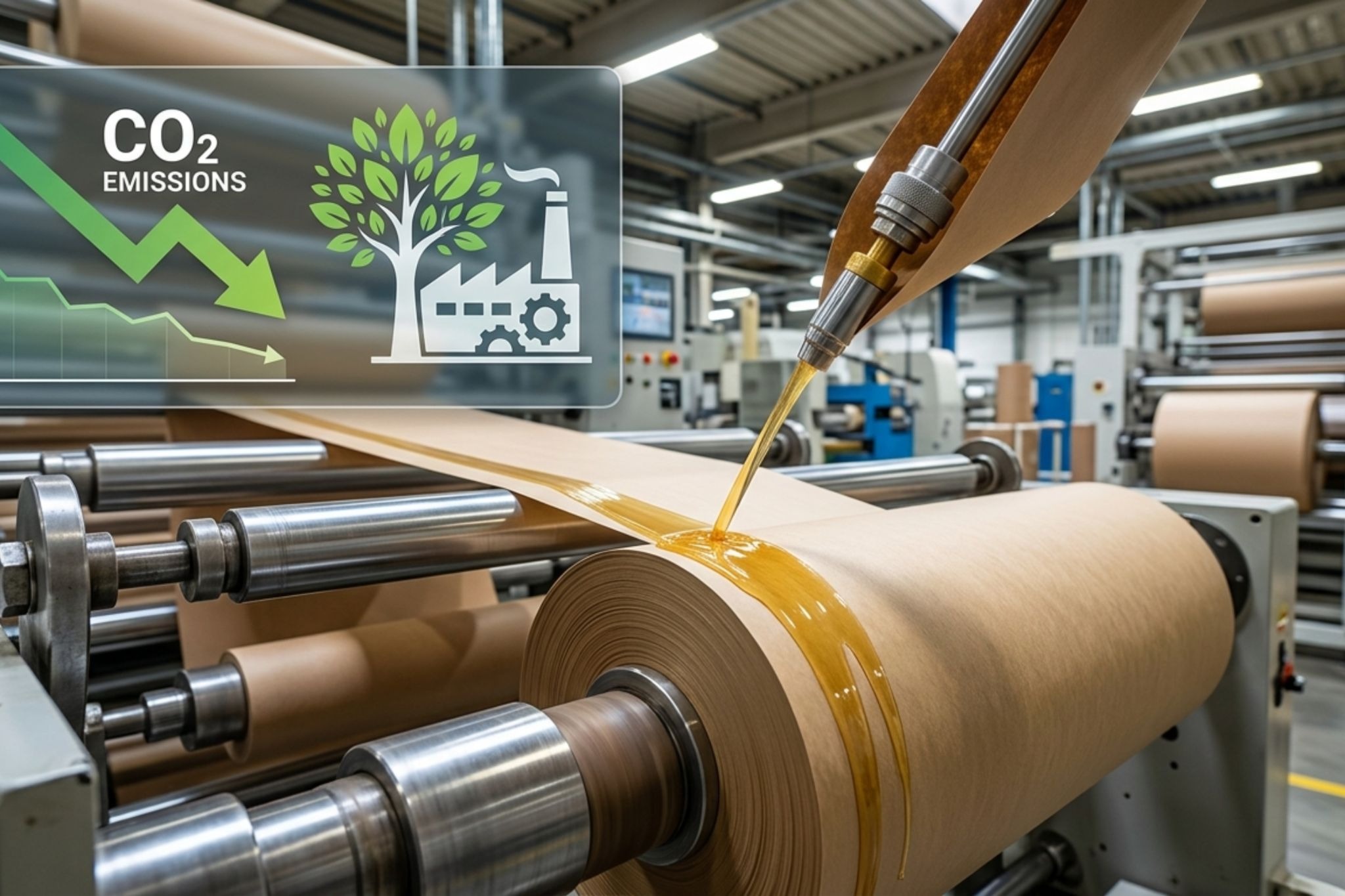
By combining these factors, industries often observe a noticeable reduction in overall carbon footprint, especially in high-volume operations like spiral winding.
Performance Without Compromise
A common concern is whether eco-friendly adhesives can match industrial performance standards. Modern formulations of stable tapioca dextrin are engineered for:
- Consistent viscosity and controlled pH
- Strong initial tack and bonding strength
- Compatibility with high-speed winding machines
- Reduced machine downtime due to stable flow properties
For instance, solutions like Stardex® 2155-Tube, specifically designed as a dextrin for paper tube core, deliver both environmental and operational benefits, making them suitable for demanding industrial setups.
Additional Sustainability Gains in Spiral Winding
Switching to starch-based dextrins also brings indirect environmental advantages:
- Reduced dependency on fossil fuels
- Safer working conditions due to non-toxic formulations
- Easier wastewater management
- Alignment with global ESG and sustainability goals
These benefits extend beyond compliance they improve brand positioning and long term operational resilience.
The Future of Adhesives in Paper Tube Manufacturing
As industries move toward greener manufacturing practices, the role of starch-based adhesives will only expand. With increasing regulatory pressure and customer demand for sustainable products, adopting bio based solutions is quickly becoming a competitive necessity.
Manufacturers who proactively transition to dextrin-based systems are not only reducing emissions but also future-proofing their production processes.
A Smarter Step Toward Sustainable Manufacturing
For manufacturers exploring ways to reduce their environmental footprint without disrupting production, switching to bio-based dextrins is a practical and measurable step.
With decades of expertise in starch chemistry and industrial applications, Premier Starch Products Pvt. Ltd. supports businesses with high performance, plant-based adhesive solutions tailored for spiral winding and paper tube core manufacturing. Their R&D backed formulations ensure consistency, efficiency, and sustainability helping industries move forward with confidence.