In manufacturing, consistency is often the difference between smooth production and costly downtime. Whether you’re producing corrugated boxes, coated abrasives, paints, paper tubes, foundry chemicals, or mining formulations, the quality of your raw materials directly impacts the performance of your finished products. One of the most overlooked yet critical factors is the consistency of industrial starch.
A slight variation in viscosity, moisture, pH, or solubility from one batch to another can disrupt production parameters, increase waste, and affect product quality. This is why choosing an experienced industrial starch manufacturer that prioritises rigorous quality control is just as important as selecting the right product grade.
In this article, we’ll explore why batch consistency matters, how it affects manufacturing efficiency, and what businesses should look for when sourcing reliable industrial starch products.
What Does Batch Consistency Mean in Industrial Starch?
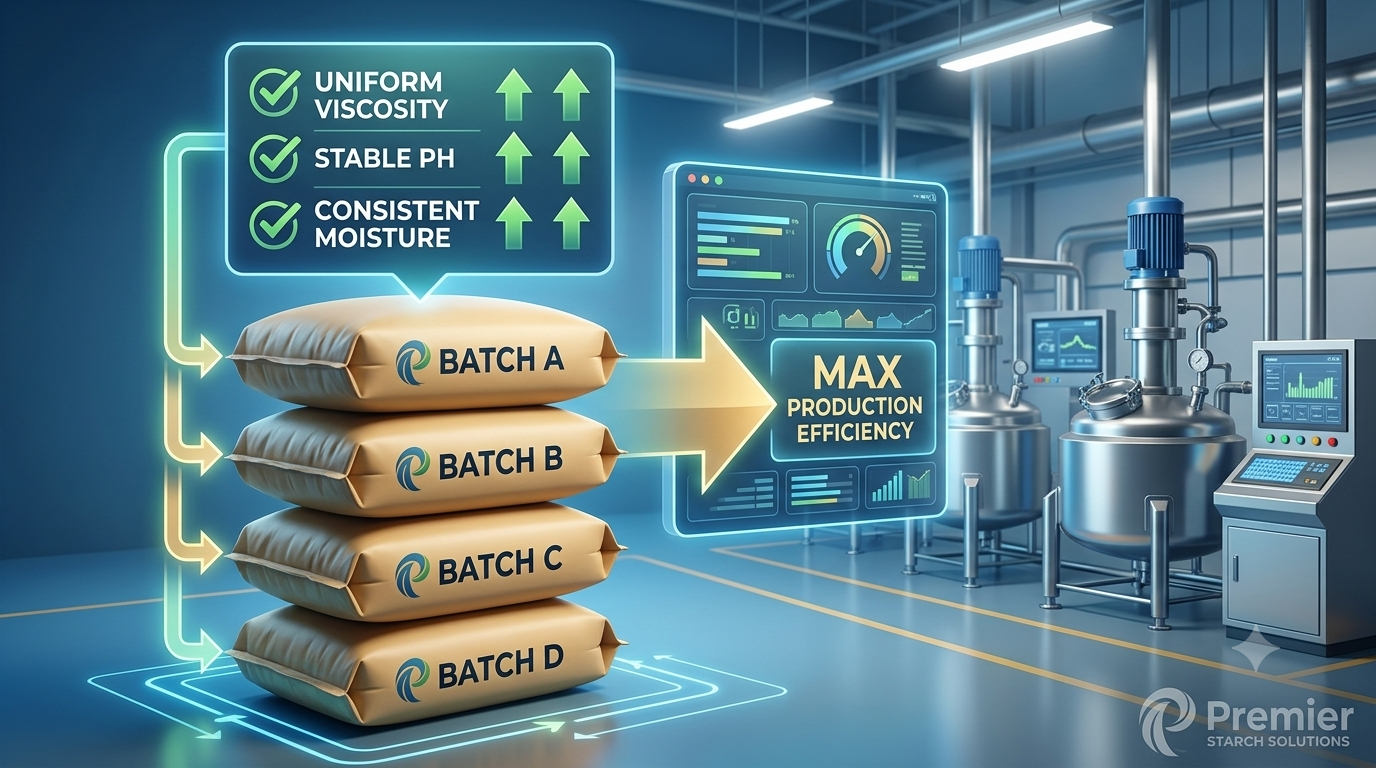
Batch consistency refers to the ability of every production batch of starch or dextrin to deliver the same physical and chemical characteristics. This includes maintaining stable:
- Viscosity
- Moisture content
- pH levels
- Solubility
- Adhesion performance
- Setting and drying characteristics
When these properties remain consistent, manufacturers can run their production lines with confidence, knowing that every batch will perform exactly as expected.
Why Batch Consistency Directly Impacts Production Efficiency
Manufacturing processes are carefully calibrated around specific material properties. Even minor variations in starch quality can force operators to adjust machine settings, increase material usage, or slow production speeds.
The result is reduced productivity and higher operating costs.
Common Production Challenges Caused by Inconsistent Starch
| Issue | Impact on Production |
| Variable viscosity | Uneven application and inconsistent coating |
| Excess moisture | Longer drying time and reduced storage stability |
| Poor solubility | Lumps, clogged systems, and difficult mixing |
| Unstable bonding strength | Product failures and increased rejection rates |
| Frequent process adjustments | Reduced machine efficiency and higher labour costs |
Maintaining consistent raw materials helps eliminate these issues before they affect production.
How Consistent Starch Improves Manufacturing Performance
Reliable starch quality offers benefits that extend throughout the production process.
Better Process Stability
Operators spend less time recalibrating machines, allowing production lines to run continuously with minimal interruptions.
Reduced Material Waste
Consistent starch performance reduces rejected batches, saving both raw materials and production costs.
Predictable Product Quality
Customers expect uniform performance from every shipment. Consistent starch helps manufacturers maintain the same product standards across every production cycle.
Lower Maintenance Costs
Stable starch formulations reduce equipment fouling, clogging, and cleaning frequency, improving overall plant efficiency.
Why Quality Control Makes the Difference
Batch consistency doesn’t happen by chance it requires strict manufacturing controls and continuous testing.
An experienced manufacturer performs quality checks throughout production rather than relying solely on final inspection.
Typical quality parameters include:
- Viscosity testing using Brookfield Viscometers and BS Flow Cup methods
- Moisture analysis
- pH testing
- Solubility evaluation
- Batch validation before dispatch
These checks ensure every shipment delivers predictable performance for industrial applications.
Batch Consistency Across Different Industries
Different industries rely on starch in different ways, but all require dependable performance.
Corrugated Box Manufacturing
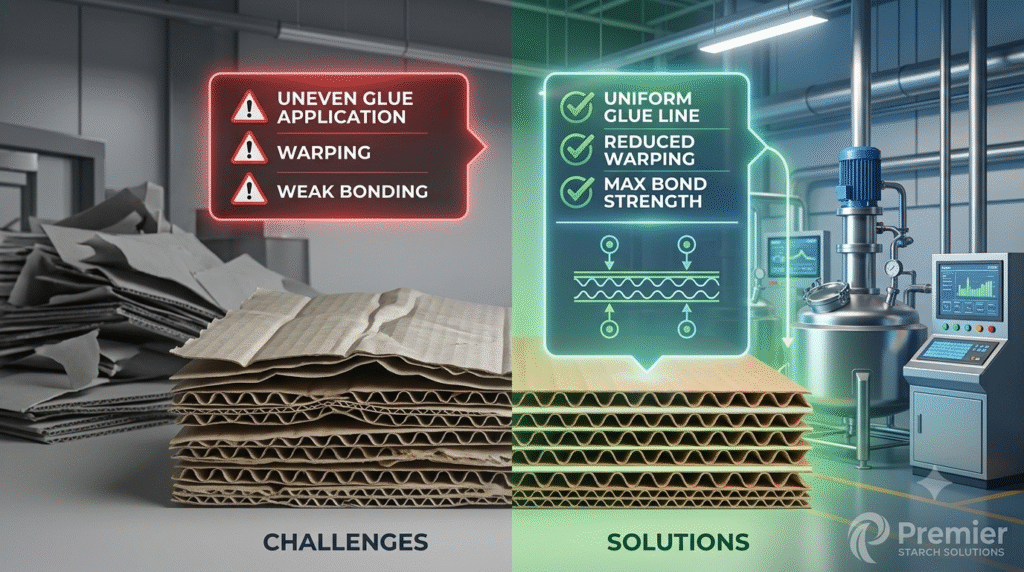
Corrugation plants require adhesives with stable viscosity and predictable bonding characteristics. Even small variations can affect board strength and machine speed.
Products such as Stargel® 5060 (ideal for cold pasting applications) and Stardex® 840 (hot pasting gum powder) are developed to provide reliable adhesive performance across different production environments.
Paper Tube & Core Manufacturing
Paper tube manufacturers depend on consistent adhesive strength to ensure dimensional stability and long-lasting bonding.
For these applications, Stardex® 2155-Tube is specifically formulated to deliver dependable bonding performance throughout production.
Mining Industry
Mining operations using froth flotation processes require dextrins with predictable behaviour to maintain separation efficiency.
Stardex® 2155-Mining is designed for mining applications where consistent product quality supports stable processing conditions.
Paint Manufacturing
Paint formulations require stable starch derivatives that maintain viscosity and dispersion characteristics across every production batch.
Stardex® 2155-AP SPL is developed to support consistent performance in paint manufacturing applications.
The Role of In-House R&D
One of the strongest indicators of a reliable starch supplier is an active research and development facility.
An in-house R&D laboratory enables manufacturers to:
- Validate every production batch
- Improve formulations continuously
- Develop customised grades
- Support customer production trials
- Troubleshoot application-specific challenges
This technical capability ensures products evolve alongside changing industrial requirements.
Why Custom Formulations Also Require Consistency
Many manufacturers require starch products tailored to their machinery, process conditions, or end-use applications.
However, customised formulations only add value when every batch performs identically.
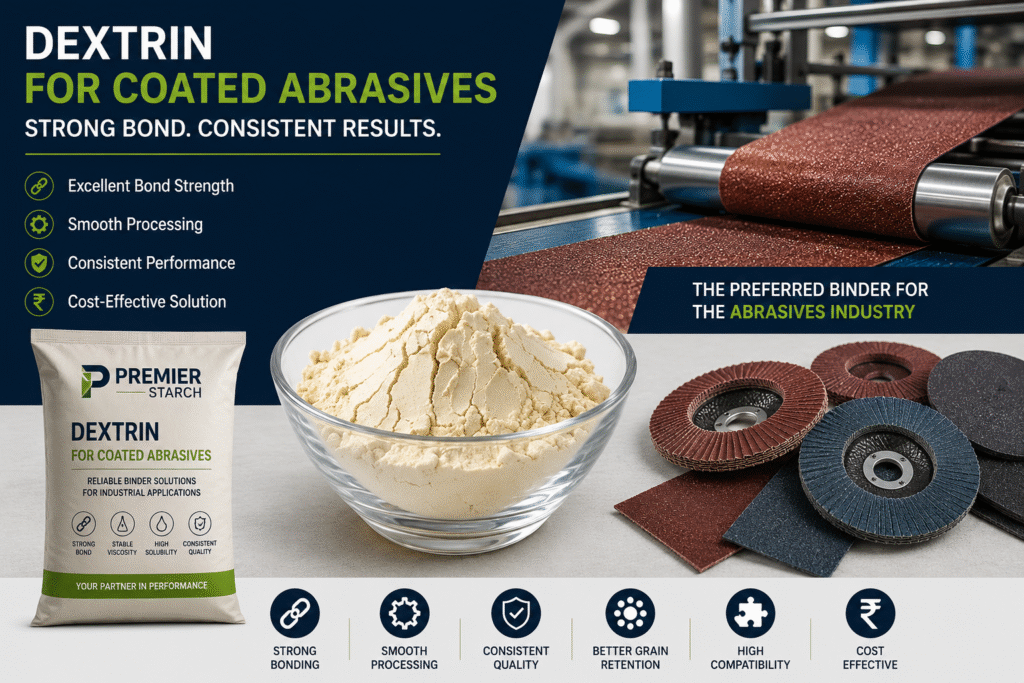
Whether supplying adhesives for high-speed corrugation plants or specialty binders for coated abrasives, maintaining formulation consistency ensures manufacturers can scale production without compromising quality.
Choosing the Right Industrial Starch Manufacturer
When evaluating suppliers, price should never be the only consideration.
Look for manufacturers that offer:
- More than three decades of industry expertise
- In-house R&D and testing laboratories
- Batch-wise quality control
- Technical support during production trials
- Reliable supply capabilities
- Custom formulation expertise
- Consistent documentation including COA and technical specifications
These factors contribute directly to long-term production efficiency.
Final Thoughts
Production efficiency is built on consistency. While machinery, operators, and process optimisation all play important roles, the quality of raw materials remains the foundation of reliable manufacturing.
Working with an experienced industrial starch manufacturer ensures every batch delivers predictable viscosity, bonding strength, moisture levels, and processing characteristics. The result is smoother operations, lower production costs, reduced waste, and higher-quality finished products.
For industries where even small process variations can have significant financial consequences, consistent industrial starch products are not simply an advantage they are essential for sustained manufacturing success.
Partner with Premier Starch for Consistent Industrial Performance
For more than 35 years, Premier Starch Products Pvt. Ltd. has supported manufacturers across corrugation, paper tubes, mining, paints, coated abrasives, foundry chemicals, and industrial adhesives with performance driven starch solutions. Every batch is backed by in-house R&D, stringent quality testing, and application-focused expertise, helping customers achieve dependable results on every production run. Whether you require standard grades or customised formulations, Premier Starch delivers consistency you can build your manufacturing process around.