Introduction
In high-performance industrial applications,
paper tube cores must withstand compression, humidity, and continuous mechanical stress. One of the most critical components enabling this performance is the adhesive system, particularly modified starch for paper tube core applications. Understanding the science of molecular bonding in modified starch helps manufacturers achieve superior moisture resistance, durability, and production efficiency.
What is Modified Starch and Why It Matters
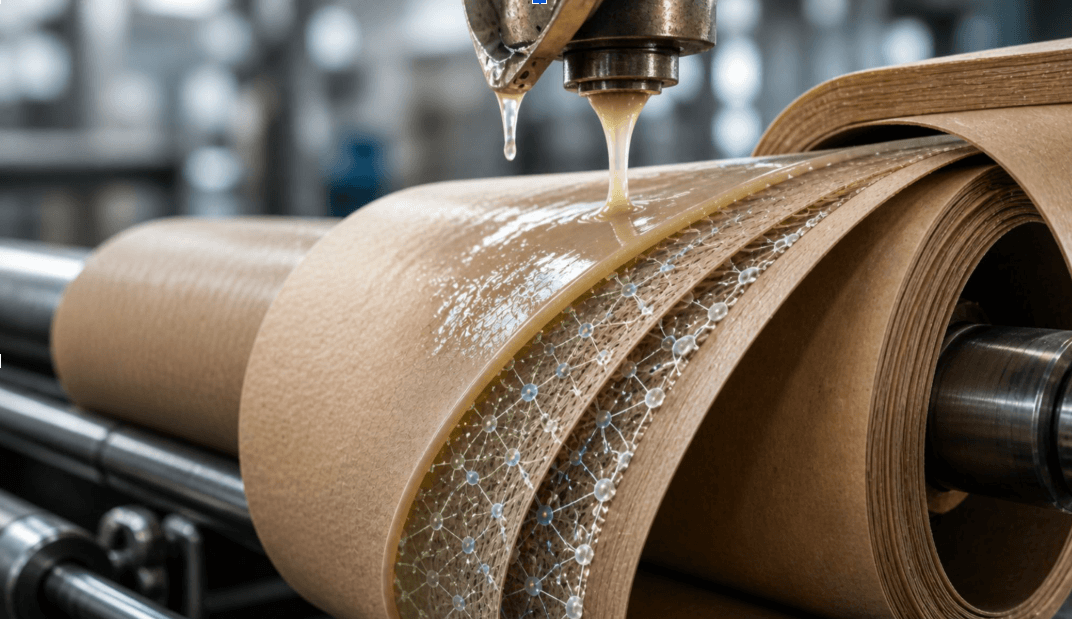
Modified starch is a plant-derived polymer that has been chemically, physically, or enzymatically altered to improve its functional properties such as adhesion, viscosity, and moisture resistance. In paper tube manufacturing, these enhancements are essential for ensuring strong inter-layer bonding and structural integrity.
Key functional improvements include:
- Enhanced film-forming ability for stronger bonding
- Controlled viscosity for consistent application
- Improved water resistance under humid conditions
- Better thermal stability during processing
These properties make modified starch a preferred choice over conventional adhesives in demanding industrial environments.
The Science Behind Molecular Bonding in Modified Starch
At the molecular level, starch consists of two primary components: amylose and amylopectin. When modified, these molecules undergo structural changes that significantly impact their bonding behaviour.
1. Hydrogen Bonding Mechanism
Modified starch forms hydrogen bonds with cellulose fibres in paper. This interaction:
- Strengthens fibre-to-fibre adhesion
- Enhances internal cohesion of the paper tube
- Reduces delamination under stress
2. Cross-Linking for Moisture Resistance
Chemical modification introduces cross-linking between starch molecules. This results in:
- Reduced water solubility
- Increased resistance to humidity and moisture absorption
- Improved durability in wet or variable environments
3. Film Formation and Barrier Properties
Modified starch creates a continuous film over paper layers:
- Acts as a moisture barrier
- Prevents water penetration into fibre layers
- Maintains structural strength over time
4. Controlled Gelatinisation
During processing, starch undergoes gelatinisation, allowing it to penetrate paper fibres effectively. Controlled modification ensures:
- Uniform adhesive spread
- Optimal bonding during high-speed production
- Reduced adhesive consumption
Why Moisture Resistance is Critical in Paper Tube Cores
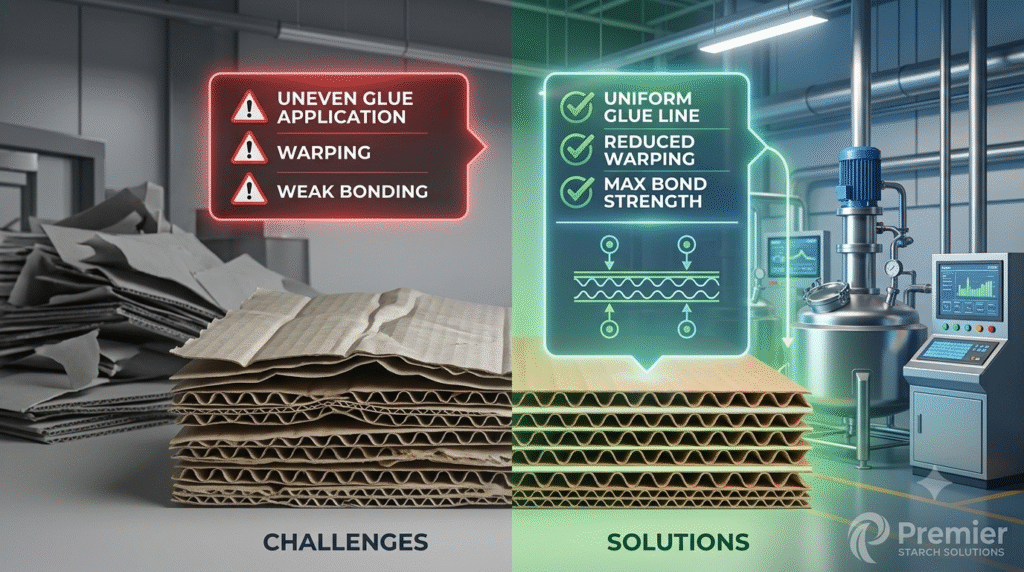
Paper tubes are widely used in industries such as textiles, films, packaging, and industrial winding. Exposure to humidity can lead to:
- Loss of compression strength
- Warping or deformation
- Adhesive failure
Using modified starch for paper tube core manufacturing helps mitigate these issues by providing:
- Long-lasting structural integrity
- Resistance to environmental fluctuations
- Reliable performance in storage and transport
Industrial Advantages of Using Modified Starch
Manufacturers choosing advanced starch-based adhesives benefit from:
- Consistent bond strength across layers
- Improved machine efficiency in winding operations
- Reduced downtime due to adhesive failure
- Eco-friendly and biodegradable adhesive solutions
Application in Paper Tube Manufacturing
In practical applications, modified starch adhesives are used in:
- Spiral and parallel winding processes
- Multi-layer tube bonding
- High-speed production lines
Specialised formulations such as
Stardex® 2155-H and
Stardex® 2155-Tube are designed specifically for paper tube cores, offering optimal viscosity, bonding strength, and moisture resistance.
How to Choose the Right Modified Starch for Paper Tubes
Selecting the right adhesive formulation depends on several factors:
- Type of paper used (kraft, recycled, etc.)
- Production speed and machinery
- Environmental conditions (humidity, temperature)
- Required strength and durability
Working with a supplier that offers customised formulations and technical support ensures optimal performance tailored to your process. optimal performance tailored to your process
The Future of Starch-Based Adhesives in Industrial Applications
With increasing demand for sustainable manufacturing, modified starch continues to evolve as a viable alternative to synthetic adhesives. Innovations in formulation are enabling:
- Higher moisture resistance
- Enhanced bonding strength
- Reduced environmental impact
This makes starch-based solutions a key component in the future of industrial adhesive technology.
Conclusion
The science of molecular bonding in modified starch plays a crucial role in delivering moisture-resistant, high-strength paper tube cores. From hydrogen bonding to cross-linking and film formation, each mechanism contributes to improved performance and reliability. By leveraging advanced modified starch for paper tube core applications, manufacturers can achieve superior product quality while maintaining sustainability.
Why Choose Premier Starch?
With over 35 years of expertise, Premier Starch Products Pvt. Ltd. offers industry-proven solutions tailored for demanding applications like paper tube manufacturing. Backed by in-house R&D, stringent quality control, and customised formulations, the company delivers consistent, high-performance starch-based adhesives. Whether you require bulk supply, technical support, or specialised grades, Premier Starch ensures reliable solutions that enhance your production efficiency and product durability.